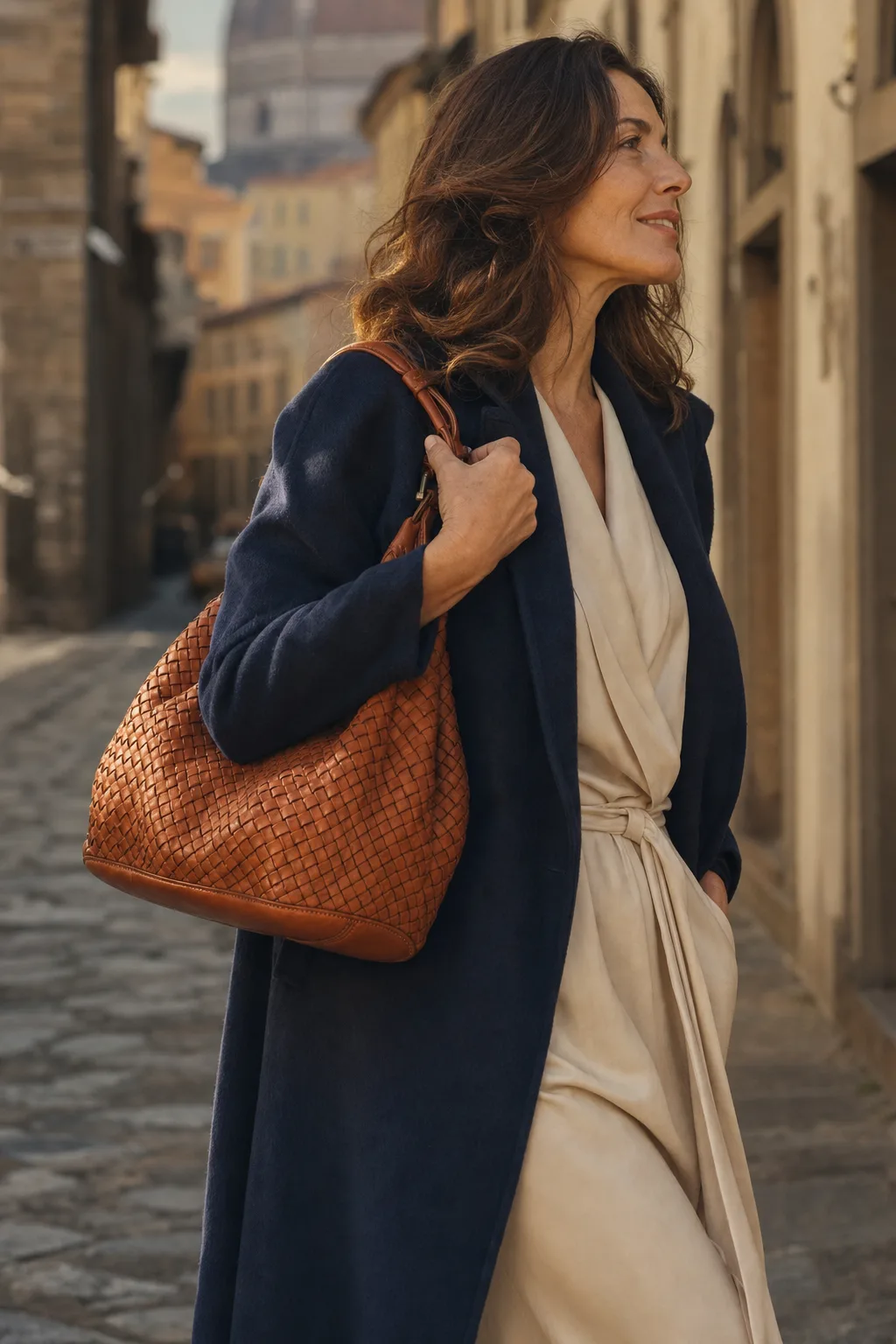
A crossbody is usually the first leather bag a visitor buys in Florence: small, hands-free, easy to decide on the spot. It is also the most copied piece in the city. The whole bag hangs from one strap and two anchor points, and that is where a hand-built Italian leather crossbody bag and a market copy stop looking alike.
- On a crossbody the strap and its two anchor points carry everything. That is what fails first, and what a copy cannot fake.
- Five build details separate a hand-made strap: stitched anchors, thicker strap leather, sealed edges, reinforcement stitching, length set to the person.
- A vegetable tanned crossbody in Tuscan vacchetta holds its strap shape under load. Coated leather cracks along the fold lines.
- Five checks in the shop take two minutes and settle the question before you look at the price.
- Honest range: a small crossbody in full-grain hide sits in the low hundreds; size, lining and hardware move it into the mid or upper hundreds.
Why the crossbody is the most copied bag in Florence
Because it is the easiest bag to sell to someone who has been walking since nine in the morning. A small leather bag in Florence is light, it costs less than a jacket, and it looks the part in a window. That combination is what a stall around San Lorenzo or Mercato Nuovo is built on, and much of what sits on those stalls arrived finished, in bulk, from abroad.
None of that is illegal, and a cheap import can be a fine holiday buy when you know what it is. The problem starts when you pay atelier money for it. We set out the general signals of a made-in-Florence piece in the guide to Florence leather bags, and the material argument in artisan leather versus synthetic. This article goes one level down, into the part of a crossbody that gives up first.
The strap is where a real bag separates from a copy
The strap is the only component carrying the entire load of the bag, every day, through two small anchor points. A copy can imitate grain, colour and shape well enough to pass in a window. It cannot imitate what happens at those anchors after eight months on the same shoulder.
Watch what actually breaks. Nobody brings me a crossbody with a worn-out front panel. They bring me one where the D-ring has pulled through a glued tab, or the strap has stretched thin at the buckle holes, or the edge coating has cracked and is shedding onto a coat. The body of the bag is usually fine. The suspension failed, and the savings on an eighty-euro bag were taken from precisely the parts nobody inspects in the shop.
How a Florentine atelier builds a crossbody strap
Five things separate a hand-built strap from a bought-in one. None of them is decorative, and all five are visible once you know where to look.
- Anchors stitched through, not glued. The tab that holds the D-ring is folded around the ring and sewn through both layers of hide, often twice. Glue alone under daily load peels, and the ring works its way out.
- Strap leather cut thicker than the body. The panels of the bag can be softer. The strap is cut from the firm part of the hide so it holds its shape and does not stretch out of the buckle holes.
- Edges creased, sealed and burnished. Cut edges are rounded, sealed in layers and slicked smooth with heat, so the strap runs on a collar without abrading. Coating painted over a raw edge is the shortcut, and it cracks.
- Reinforcement stitching at the attachment points. Where the strap meets the tab we add a box or a bar of extra stitches. It is the seatbelt of the bag, and it costs minutes a factory schedule does not have.
- Length set to the person, not to a shelf. A crossbody rides right when the bag sits at your hip bone, and that depends on your height. We punch and finish the holes for the person carrying it.
The hide under the strap: Tuscan vegetable tanning
The leather in a real Florence leather bag almost always comes from the vegetable tanneries of Santa Croce sull'Arno, forty minutes west of the city. Tannins from chestnut, quebracho and mimosa replace chrome salts, and the hides spend thirty to forty days in the pits instead of a day or two.
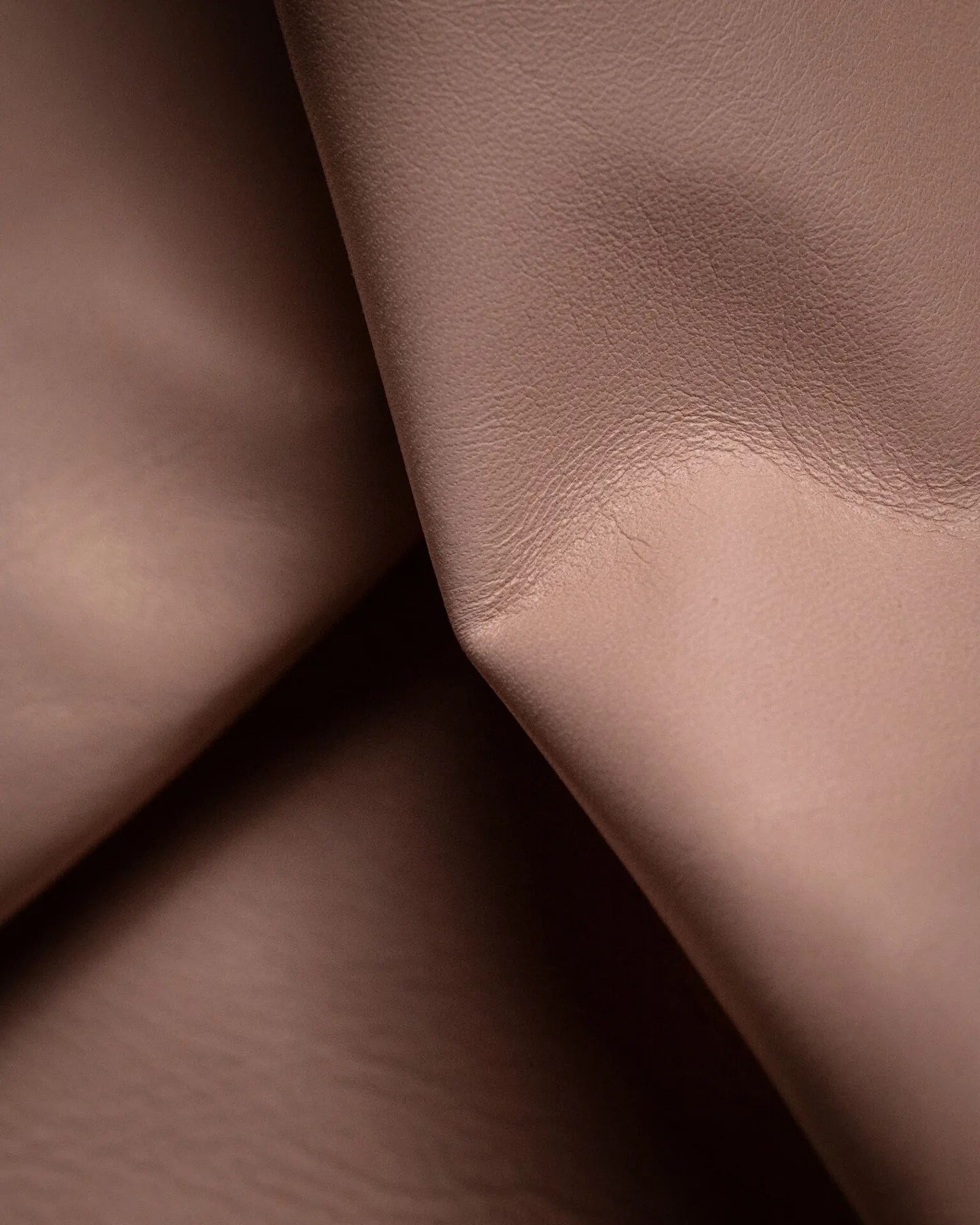
What comes out is vacchetta: full-grain leather left uncoated, firm enough to hold a strap under load, open enough to take the oil of your hand and darken into a patina over years. The tanneries of the district sit under the Consorzio Vera Pelle Italiana Conciata al Vegetale in Toscana, which certifies genuine Tuscan vegetable-tanned leather and gives each certified piece a traceable mark. The long version is in how Florentine leather is made.
Two minutes in the shop: five checks before you buy
Take the bag off the hook and do these five things before you look at the price.
- Pull the anchor tab. Look for stitch holes through the folded leather. A tab held by glue alone shows a clean seam with no thread.
- Fold the strap back on itself. Real hide creases and springs back. Coated or split leather leaves a pale line that stays.
- Run a thumb along the strap edge. It should feel rounded and hard. Sharp, raw or flaking means the edge was never finished.
- Turn the strap over. The back should be the same leather as the front, not a suede-look layer glued underneath.
- Ask who cut it. A workshop answers with a name and a street. A reseller changes the subject.
Three of those and you are holding real work. All five and you can read the rest of the city's windows instead of guessing, the same way we describe for outerwear in how to spot a real leather jacket in Florence.
What a handmade Italian crossbody costs
More than a market bag, less than a logo. A small crossbody in full-grain Tuscan hide sits in the low hundreds. Add size, a lined interior, hand-set hardware or an exotic skin and it moves into the mid or upper hundreds. Those are honest ranges, not a quote.
The price follows the hide and the hours, and most of the hours go into the five details above. When a shop cannot tell you which tannery the leather came from, the low price is telling you where the savings were found. You can see what we have now in the collection, or read how a commission actually runs in our bespoke atelier guide.
Come and hang one on your shoulder
You cannot judge a crossbody on a hook. You judge it loaded, on your own shoulder, with the strap set to your height.
I am the third generation on Via del Proconsolo, and our workshop is at number 5r, a few minutes from the Duomo, open seven days a week. Walk in, put a bag on, pull the anchors, fold the strap, and run every check in this article on real pieces. Nobody will follow you around the shop. If you are still planning the trip, or you live abroad, we do the same over a thirty-minute video call: I hold the hides to the camera, show you the anchor tabs and the edge work, and we talk through the length and the load you actually carry. Some people order from the collection, some start a bespoke project, and some leave knowing what to look for in every other window in Florence. All three are fine with us.