Walk down Via del Proconsolo or past San Lorenzo and you pass a hundred windows selling Italian leather bags. Most were not made in Florence. This piece is how you tell a real Florence leather bag from one that only wears the word: by grain, by stitch, by the tannery behind it, and by the atelier that will let you watch the work.
- A Florence leather bag and a bag sold in Florence are not the same thing. Much of what visitors buy is imported and finished for the shelf.
- Full-grain, vegetable-tanned leather from the Santa Croce sull'Arno district is the Tuscan signature. It darkens and gains patina; coated leather stays flat.
- Read the edges, the stitching and the lining before the logo. That is where import gives itself away.
- A real made-in-Florence leather bag carries the name of a workshop you can visit, not a market stall.
- Price honesty: a hand-built bag costs more than a market copy and less than a fashion-house label using the same leather.
What "Florence leather bags" really means
A Florence leather bag is one cut, stitched and finished by an atelier inside the city or its immediate district, in Tuscan-tanned hide. The phrase gets stretched. "Made in Italy" can mean a bag assembled anywhere in the country from imported leather. "Florentine style" means nothing at all. A bag "sold in Florence" may have crossed three borders before it reached the window.
Florence has worked leather since the Middle Ages. The craft sits in two places today. In the workshops of the historic centre, where bags are cut and stitched. And in the tanneries of Santa Croce sull'Arno, forty minutes west, where the raw hides become leather. A real Florence leather atelier bag usually touches both. When neither is in the chain, the word "Florence" is doing marketing work, not describing where the bag was born.
I am the third generation on Via del Proconsolo, and I hear the honest question at the bench every week: how do I know this was made here? The answer is never the label. Labels are printed. The answer is in the material and in the hand that closed the seams. The rest of this guide is how to read both.
Why so many "Italian" leather bags in Florence are imported
Because it is cheaper, and because a visitor cannot tell in ten seconds. The leather markets around San Lorenzo and Mercato Nuovo built their volume on exactly that gap.
A structured bag takes a skilled cutter and stitcher the better part of a day, sometimes more. A workshop wage in Tuscany is not a workshop wage in a low-cost country. So a stall that needs to sell a bag at eighty euros buys it finished, in bulk, from abroad, and lets the address on the receipt say Firenze. The leather is often split and coated to pass for full-grain under shop light. Laura Morelli, who writes on genuine Italian craft, has spent a career warning travellers about this precise thing: the souvenir that looks Tuscan and was never near a Tuscan tannery.
None of it is illegal, and not all of it is bad. A cheap import bag can be a fine holiday buy when you know that is what it is. The problem is paying atelier money for a mass piece. When you want a bag that outlives the trip, a bag that ages instead of peeling, you have to read the signals a shelf-finished import cannot fake. We wrote the long version of that difference in artisan leather versus synthetic.
Seven signs of a real made-in-Florence leather bag
You do not need to be a maker to read a bag. Seven things give it away, and you can check all seven in the shop, in a couple of minutes.
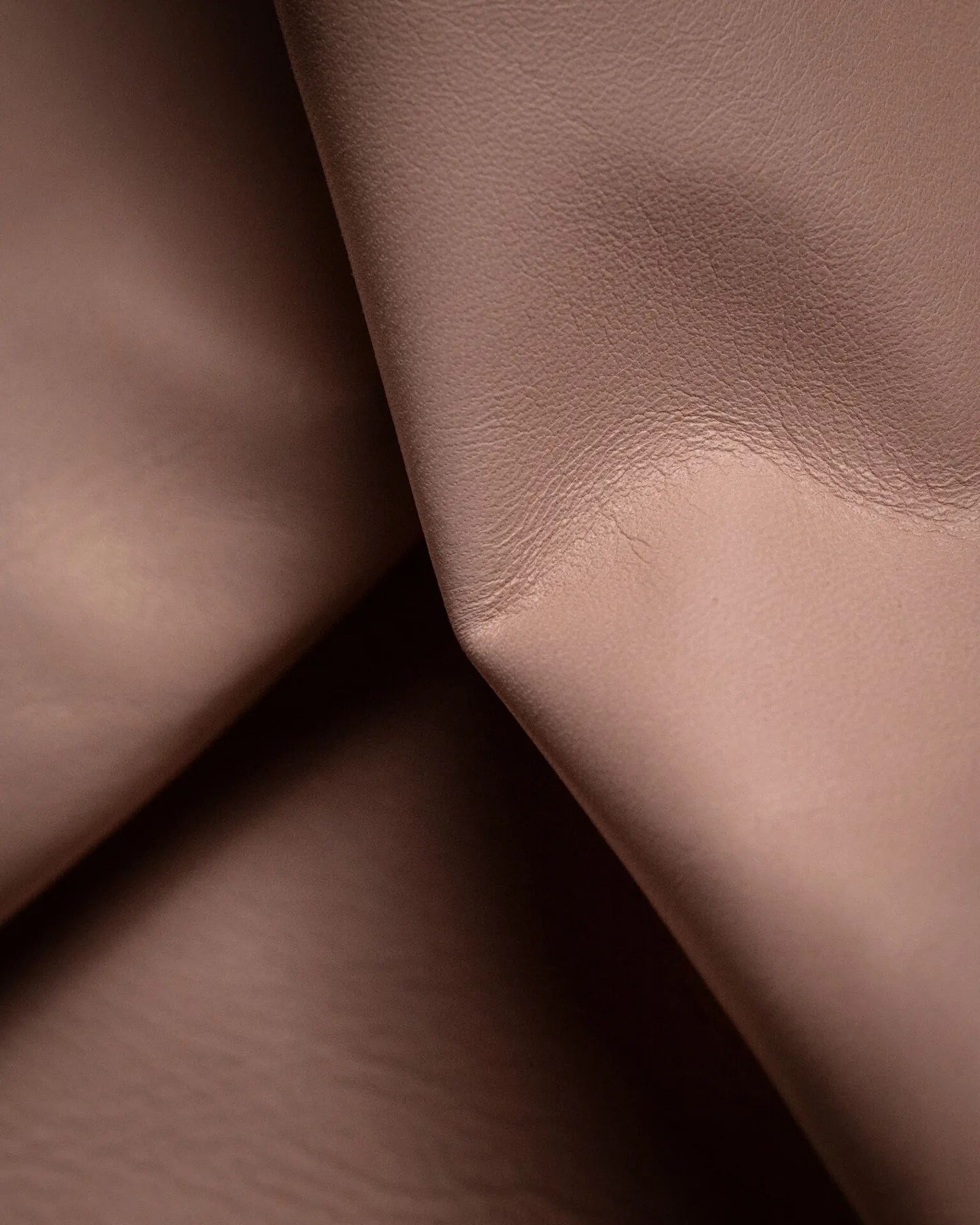
- The grain is irregular. Full-grain leather keeps the skin's own surface: fine pores, the odd healed scar, a grain that shifts across the hide. Uniform, printed-looking grain is corrected or coated leather with a pattern stamped on top. Real hide is never perfectly even.
- The edges are painted or burnished by hand. Turn the bag over and look at the cut edges of the straps. A made-in-Florence piece has edges sealed with layers of edge paint or slicked smooth with heat, rounded to the touch. Import shortcuts leave edges raw, cracked, or capped with a plastic trim.
- The stitching is even and slightly angled. Hand or bench stitching runs at a steady angle, tight, with no skipped holes and no loose thread ends. Machine-blasted seams on cheap bags wander, pucker the leather, or hide under a glued fold.
- The leather smells of tannery, not chemistry. Vegetable-tanned hide smells warm, woody, a little sweet. A sharp plastic or solvent smell is a coated or chrome-finished import. Your nose is a good instrument here.
- The hardware is weighted. Zips, buckles and feet on a real bag feel heavy and turn smoothly. Fake-luxury bags carry a stranger's logo stamped on light metal. A Florentine atelier uses its own name or good plain hardware, never someone else's brand.
- The lining is leather or honest cloth, sewn in. Look inside. A quality bag is lined in suede, leather, or a heavy cotton, stitched at the seams. Glued-in shiny polyester that lifts at the corner is a mass-production tell.
- Someone can name who made it. The strongest sign is not on the bag at all. Ask who cut it and where. A real workshop answers with a name and often a street. A reseller changes the subject.
Check three of these and you already know more than most buyers on the street. Check all seven and you can walk into any window in the city and read it. It is the same test we describe for outerwear in how to spot a real leather jacket in Florence. The material tells the truth the tag will not.
Vegetable tanning: the Tuscan signature behind the bag
The leather in a real Florence bag almost always comes from the vegetable tanneries of Santa Croce sull'Arno. That single fact explains why it ages the way it does.
Vegetable tanning uses tannins from chestnut, quebracho and mimosa instead of chrome salts. It takes thirty to forty days in the pits, against a day or two for industrial chrome. The result is vacchetta: full-grain leather left uncoated, so it drinks in light and the oil of the hand and darkens over years into a patina no factory can pre-print. The tanneries of the district sit under the Consorzio Vera Pelle Italiana Conciata al Vegetale in Toscana, which certifies genuine Tuscan vegetable-tanned leather and gives each certified piece a traceable mark.
This matters for a bag more than for almost anything else you carry, because a bag is handled every day. Chrome-tanned or coated leather looks its best in the shop and slowly worse after. Vegetable-tanned Tuscan leather looks honest in the shop and better in five years. If you want the full account of how the hide is made, we set it out in how Florentine leather is made.
The bags a Florentine atelier builds by hand
The same hands that cut a jacket cut a bag. In our workshop the everyday requests are three: a crossbody for the city, a tote for work and travel, and a structured briefcase.
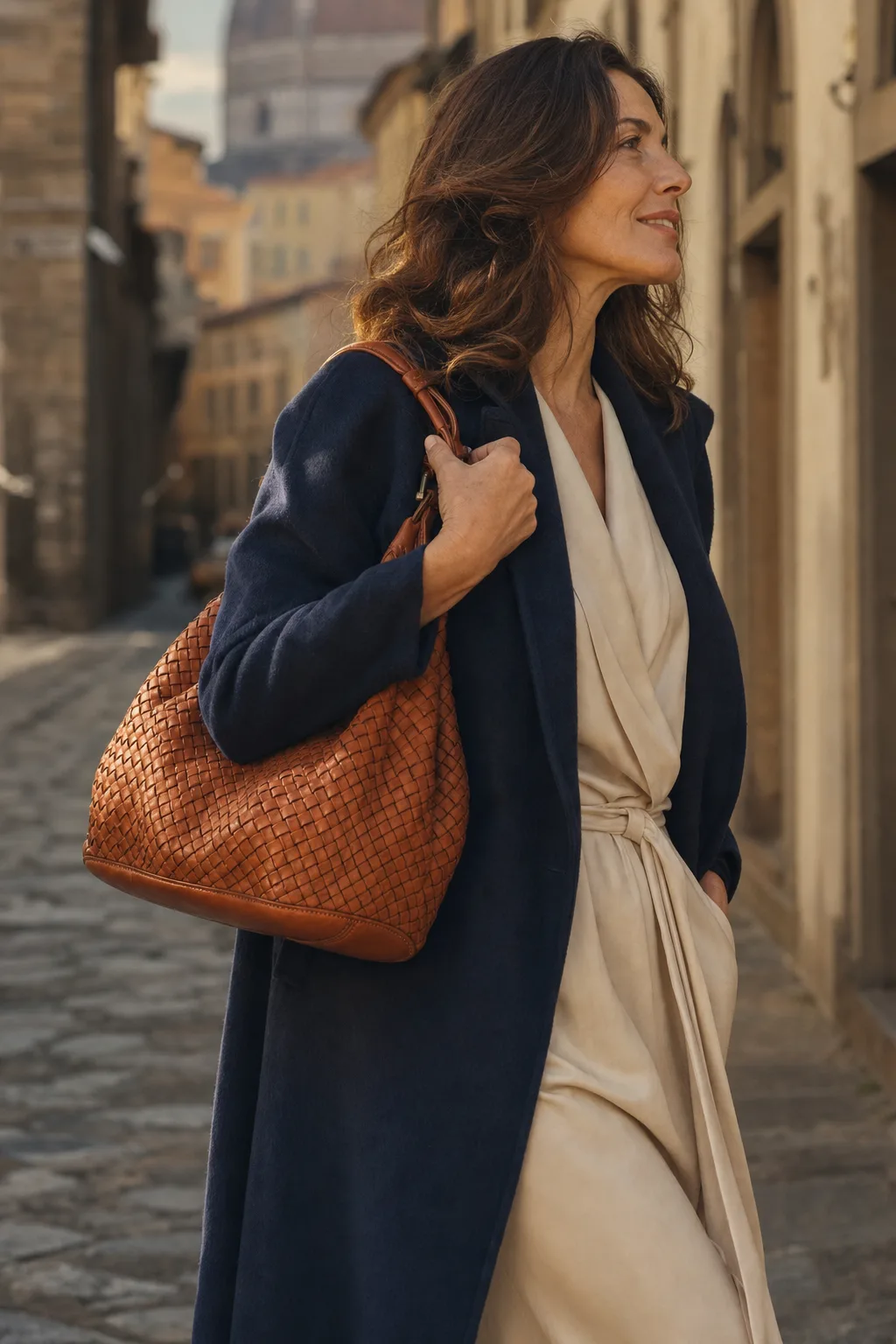
An Italian leather crossbody bag is the piece people reach for first: small, hands-free, built on a strap the maker can size to your height. A leather tote is the workhorse: one large hide panel, reinforced handles, a base that holds its shape when the bag is full. A men's leather briefcase is the heirloom of the group, the bag a father carries to work and hands to a child, which is why the leather and the stitching on it get the most attention.
None of these needs to be bespoke to be real. A made-in-Florence bag off the shelf of a genuine atelier is already cut and stitched by hand from Tuscan hide. Bespoke changes the size, the leather and the fittings to one person; the method underneath is the same. You can see the current pieces in the collection, read how a commission actually works in our bespoke atelier guide, or start a bespoke project before you decide.
How much a real Florence leather bag costs
More than a market copy, less than a fashion house using the same leather. A hand-built bag in Tuscan vegetable-tanned hide is neither an eighty-euro window bag nor a four-figure logo bag.
Price follows the leather and the hours. A small crossbody in full-grain hide sits in the low hundreds. A structured tote or a lined briefcase (more leather, more stitching, hand-set hardware) runs higher, into the mid or upper hundreds, and beyond for exotic hides or full bespoke. Those are honest ranges, not a quote. The number for your bag depends on the hide you choose and the work it needs, and we put it in writing before anything is cut.
The test is not the sticker. It is what the sticker buys. Pay atelier price and you should get atelier leather, atelier stitching, and a name you can return to for repair. Pay it for a shelf import and you have overpaid for a souvenir.
Come and read a bag in the hand
If you have read this far, you already buy leather better than most people who come to Florence. The last step is to hold one.
Our workshop is at Via del Proconsolo 5r, a few minutes from the Duomo, open seven days a week. Walk in, pick up the bags, fold the leather, smell it, and put all seven signs to the test on real pieces. If you are still planning your trip, or you live abroad, we do the same over a thirty-minute video call. I hold the hides to the camera, show you the grain and the stitching, and we talk through what you are after. There is no obligation to order. Some people leave with a bag, some leave knowing what to look for in every other window in the city, and both are fine with us. Three generations of my family have worked this leather on the same street. Come and see the difference between a Florence leather bag and a bag that only borrows the name.