Ask most shops in Florence how their leather is made and you get a shrug and a price. I am the third generation on Via del Proconsolo, working the same bench as my father and grandfather, and I will give you the honest answer instead. Florentine leather is made by vegetable tanning, a method older than the city's banks, slower than anything industry would tolerate, and the only reason a real Tuscan piece outlives the person who bought it.
- Florentine leather is vegetable-tanned: tannins from chestnut, quebracho and mimosa replace chemical chrome.
- The process takes 30 to 40 days, against one to two for industrial chrome tanning.
- Vacchetta is the resulting full-grain leather, left uncoated so it darkens and gains patina with use.
- Tallow grease finishing feeds the fibre and gives the surface its hand-fed warmth.
- The Consorzio Vera Pelle al Vegetale certifies genuine Tuscan vegetable-tanned hides with a numbered mark.
What does vegetable tanning actually mean?
Vegetable tanning is the process of turning raw animal hide into stable, lasting leather using tannins drawn from plants (tree bark, wood, leaves) rather than chemical salts. The word tannin comes from the same root as tanning for a reason. This is the original method, used in Tuscany for the better part of a thousand years, and the leather it produces is the leather Florence is known for.
The contrast is the whole story. Roughly four fifths of the world's leather today is chrome-tanned, soaked in chromium salts and finished in a day or two. It comes out soft, uniform, cheap, and dead. It does not change with use; it only wears down. Vegetable-tanned leather takes weeks, comes out firm and alive, and it improves. A chrome bag is at its best the day you buy it. A vegetable-tanned bag is at its best the day you hand it to your child.
I, third generation, can tell the two apart blindfolded by smell and bend. Chrome smells faintly chemical and folds without memory. Vegetable-tanned smells of wood and earth and holds the crease you put in it. That difference is built in the tannery, weeks before the leather ever reaches my bench. So that is where this story has to start.
The hides, and where they come from
Real Florentine leather begins with full cattle hides, a by-product of the food industry, sourced and tanned in the cluster of tanneries around Santa Croce sull'Arno, the leather district west of Florence. This is not a romantic detail. It is geography. The skill, the water chemistry and the family tanneries that make vegetable tanning viable are concentrated in a few square kilometres of Tuscany, and they have been for generations.
A hide arrives at the tannery raw and salted to stop it spoiling. The first work is unglamorous: soaking to rehydrate, liming to loosen the hair, and a thorough cleaning of flesh and residue. What is left is a clean, swollen pelt ready to receive the tannins. Skip or rush this stage and nothing downstream holds. My grandfather used to say the leather you finish is only as honest as the hide you started with, and he meant the dirty early work as much as the final polish.
When I choose hides for the atelier I am choosing tanners, not just skins. I want a hide whose certificate I can read, whose tannery I can name, whose grain shows the animal lived rather than the factory smoothed everything away. That choice is the first decision in any Riva piece, and it happens before a single cut.
The tannins: chestnut, quebracho, mimosa
The cleaned hides are steeped in pits and drums filled with a liquor of plant tannins, and the three that matter for Tuscan leather are chestnut, quebracho and mimosa. Each does a different job. Together they are why the leather behaves the way it does.
Chestnut, harvested from European sweet chestnut wood, is the backbone of the Tuscan recipe. It gives firmness, body and the warm base colour that the leather carries from the start. Quebracho, from a dense South American hardwood, brings depth and a richer brown, and helps the leather take and hold colour evenly. Mimosa, from acacia bark, softens the hand and rounds the tone so the finished piece is not harsh. The tannery blends these by experience, not by a printed formula, adjusting for the hide and the season.
The steeping is the slow heart of the whole thing. The hides move gradually from weaker to stronger tannin baths over weeks, so the tannins penetrate all the way through the thickness of the leather rather than just coating the surface. This is the step industry collapses into hours with chemicals. It cannot be hurried without leaving a pale, untanned core that fails years later. The patience here is the difference between leather that lasts a decade and leather that lasts a lifetime.
Drying, currying and the tallow grease finish
Once tanned, the leather is rinsed, slowly dried, and then fed. This finishing stage is called currying, and the traditional Tuscan way of doing it is with tallow grease: natural animal fats worked into the fibre by hand and warmth.
The grease matters more than people think. Tanning makes the leather stable; the fat makes it supple and water-resistant and gives it the soft, fed glow that a good vegetable-tanned hide has under the light. Without it the leather would be stiff and brittle. With it, the surface develops that warm, almost edible depth that you cannot fake with a sprayed coating. When you run your hand over a Riva strap and it feels nourished rather than plasticky, that is the tallow, worked in slowly and left to settle.
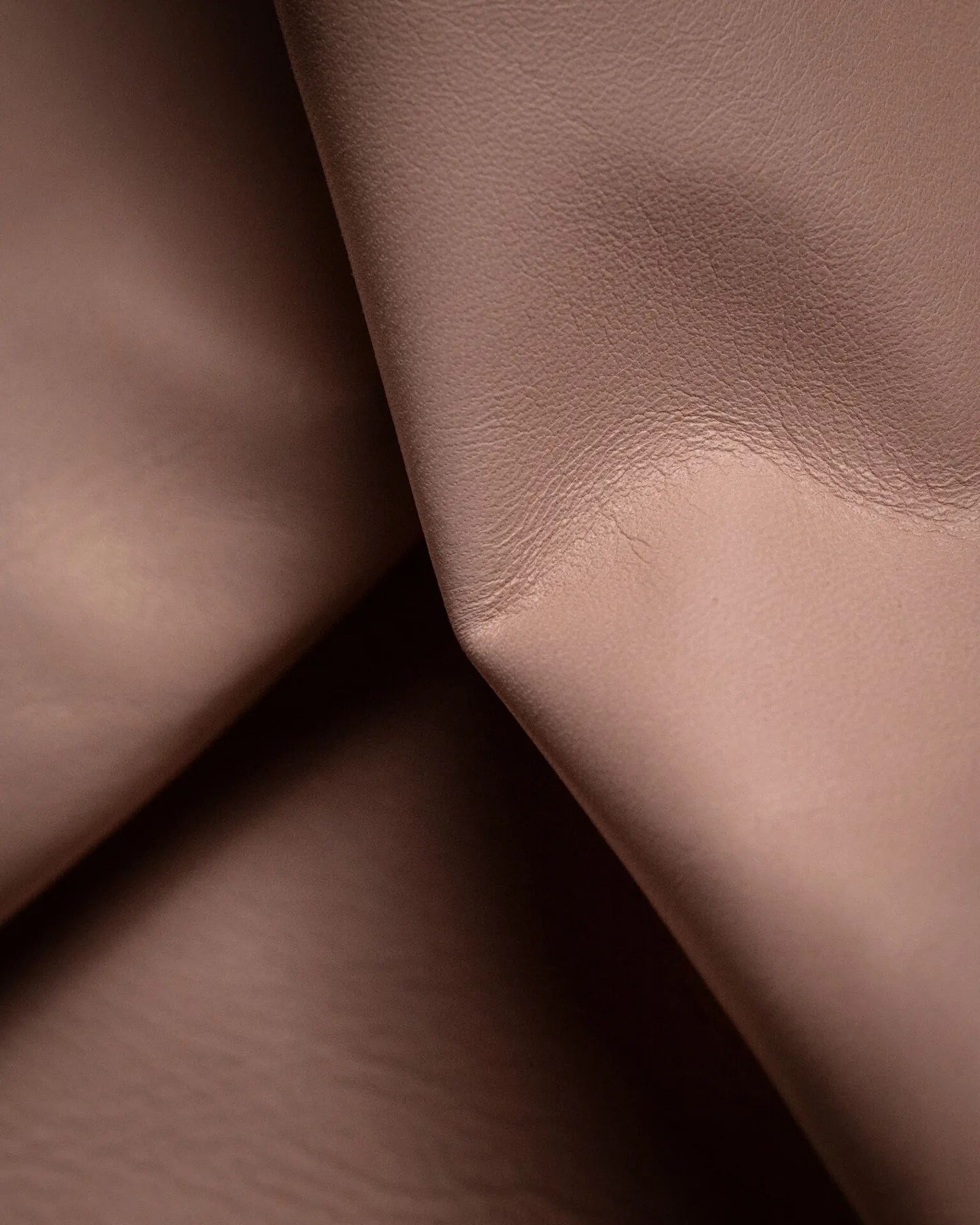
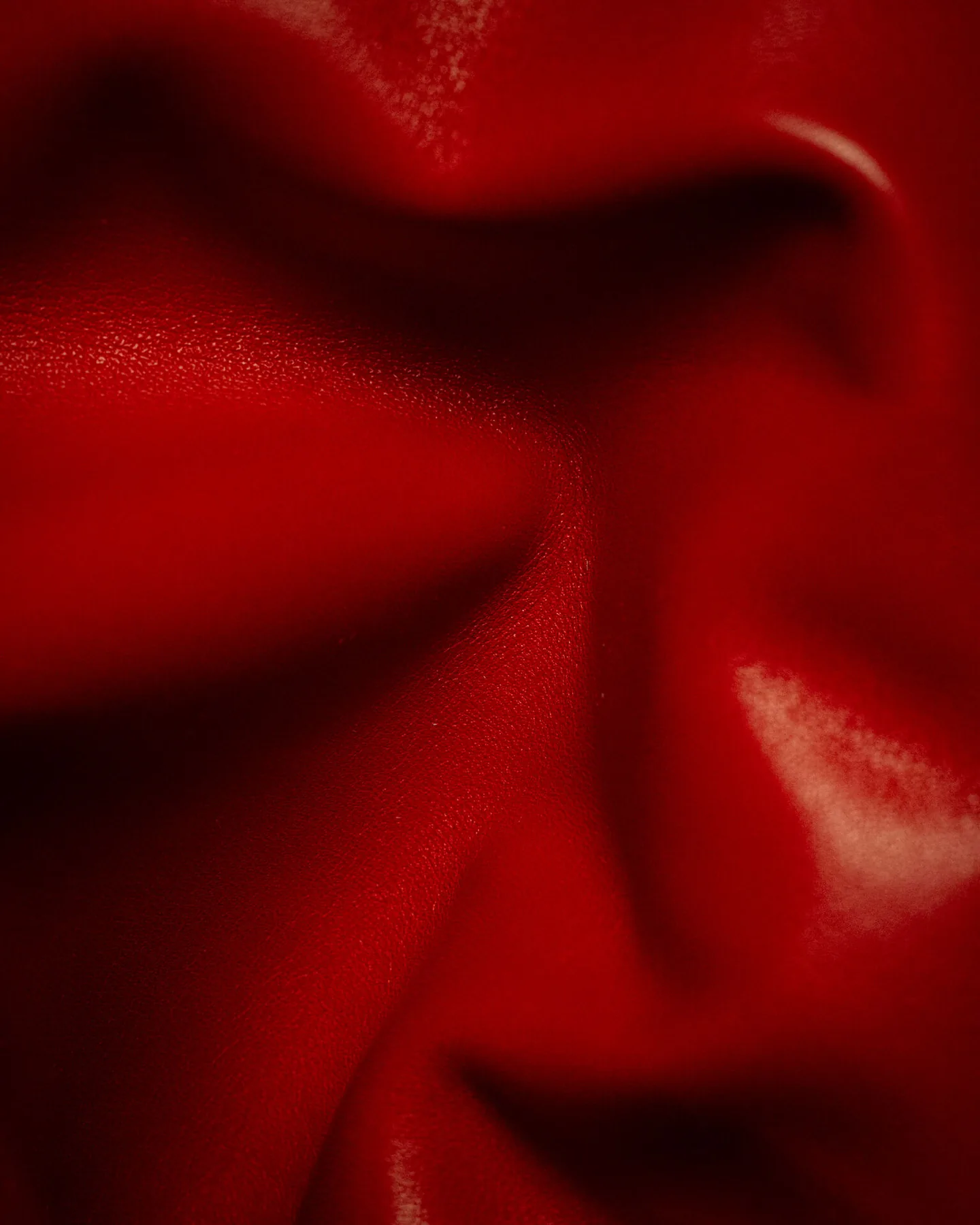
Crucially, the surface is left open. Most chrome leather is sealed under a pigment-and-plastic top coat that locks the colour and hides flaws. Tuscan vacchetta is finished aniline or near-aniline, meaning the natural grain stays visible and the leather can still breathe and absorb. This is why it darkens. It is also why it shows a scratch, and why that scratch fades back into the patina instead of staying a wound. An open surface is a leather that is still alive.
You can feel this decision in your hand the moment you pick a piece up. A sealed chrome surface is cool, slick and slightly rubbery; it skids under your fingers. An open vacchetta surface has a faint drag to it, a grip, almost a warmth, because your skin and the leather are made of similar stuff and they meet rather than slide. That difference is the single fastest way to tell a real leather jacket from a coated imitation in a Florence shop window, and it is built right here, in how the leather was finished.
What is vacchetta, and why does it patina?
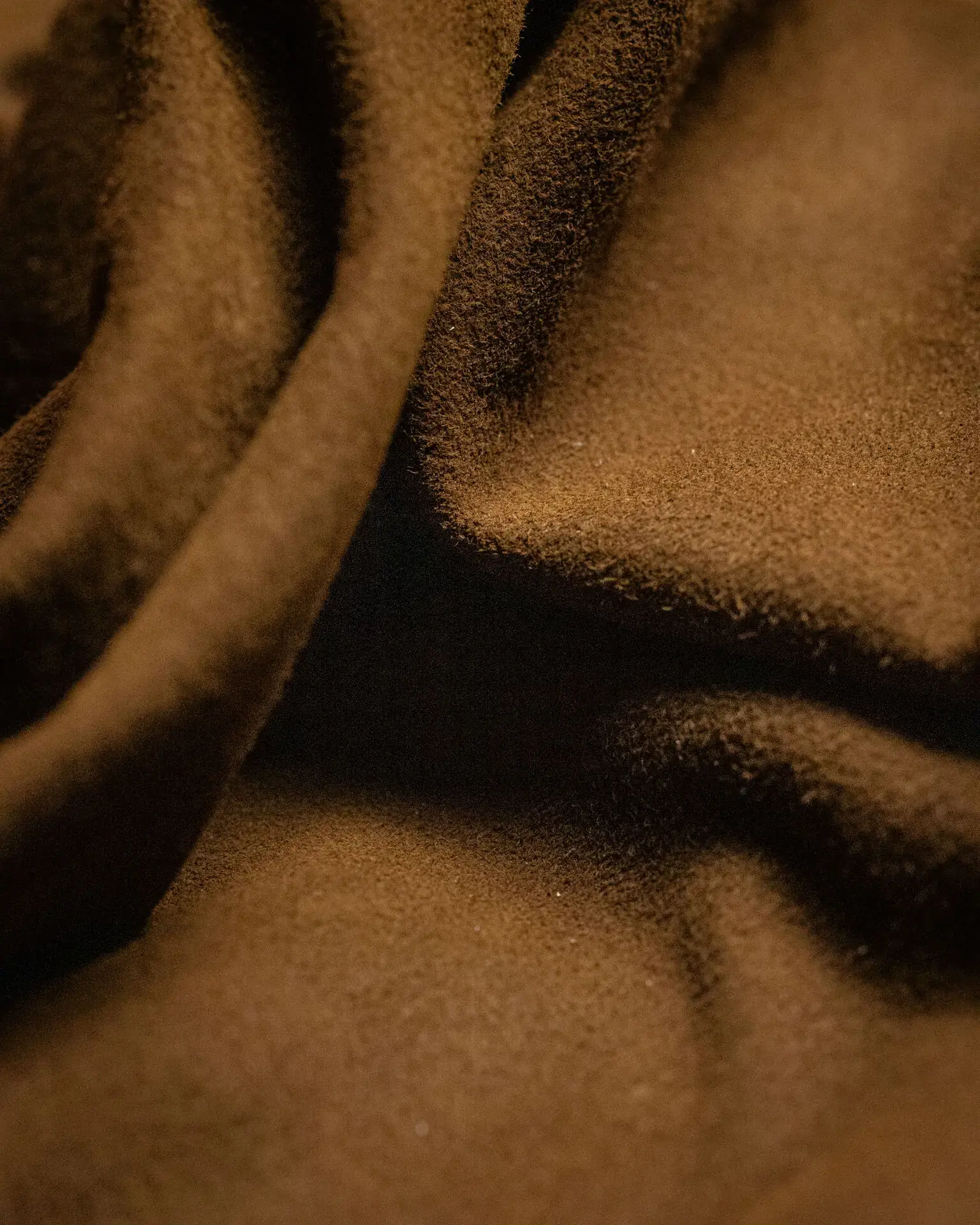
The leather that comes out of this whole process is vacchetta: full-grain, vegetable-tanned Tuscan cattle leather, left largely uncoated so the surface stays open to light, oil and use. It is the material a real Florentine maker reaches for when the point of the piece is to age beautifully rather than stay frozen.
Patina is the visible record of that aging. Because the surface is open and the tannins are reactive, vacchetta drinks in the oils from your hands and the air, and it responds to light. It starts pale, a honey or biscuit tone, and over months and years it deepens to amber, then to a dark, glowing brown. No two pieces age the same way, because no two owners use them the same way. The bag you carry on your right shoulder darkens differently from the one a colleague carries on the left. Patina is the leather writing down your life.
This is the single fact that separates a real Florentine piece from a tourist-shop imitation, and it is the one you can verify yourself in five years. A coated, chrome piece looks identical to itself the day you throw it away. A vacchetta piece looks like nothing else on earth, because it has become a portrait of how you lived with it. I have clients who bring back belts their fathers commissioned in the Seventies, the leather now the colour of strong tea, still in daily use. That is the proof. Everything else is marketing.
How you verify it: the Consorzio mark
The problem with all of the above is that the words are free. Any shop can say vegetable-tanned and Made in Italy. The verifiable proof is the Consorzio Vera Pelle Italiana Conciata al Vegetale in Toscana: the trade consortium that certifies genuine Tuscan vegetable-tanned leather produced by its member tanneries.
Certified hides carry a numbered certificate and a registered mark, which means the leather can be traced back to a real, named Tuscan tannery rather than a vague claim at the till. When you ask a Florence atelier whether the leather is vegetable-tanned, a real maker does not just say yes. They name the tannery, often by family name, and they can produce the certification on request. A reseller changes the subject to colour and price. The Consorzio exists precisely because the claim is so widely abused; the mark is how you tell the honest answer from the rehearsed one. You can read more on the consortium at pellealvegetale.it.
This is also why, in our own guide to finding a real Florence atelier, the second of the five tests is exactly this one: ask about the tanning, and listen for whether the answer comes with a name attached.
The Riva way: where the tannery ends and the bench begins
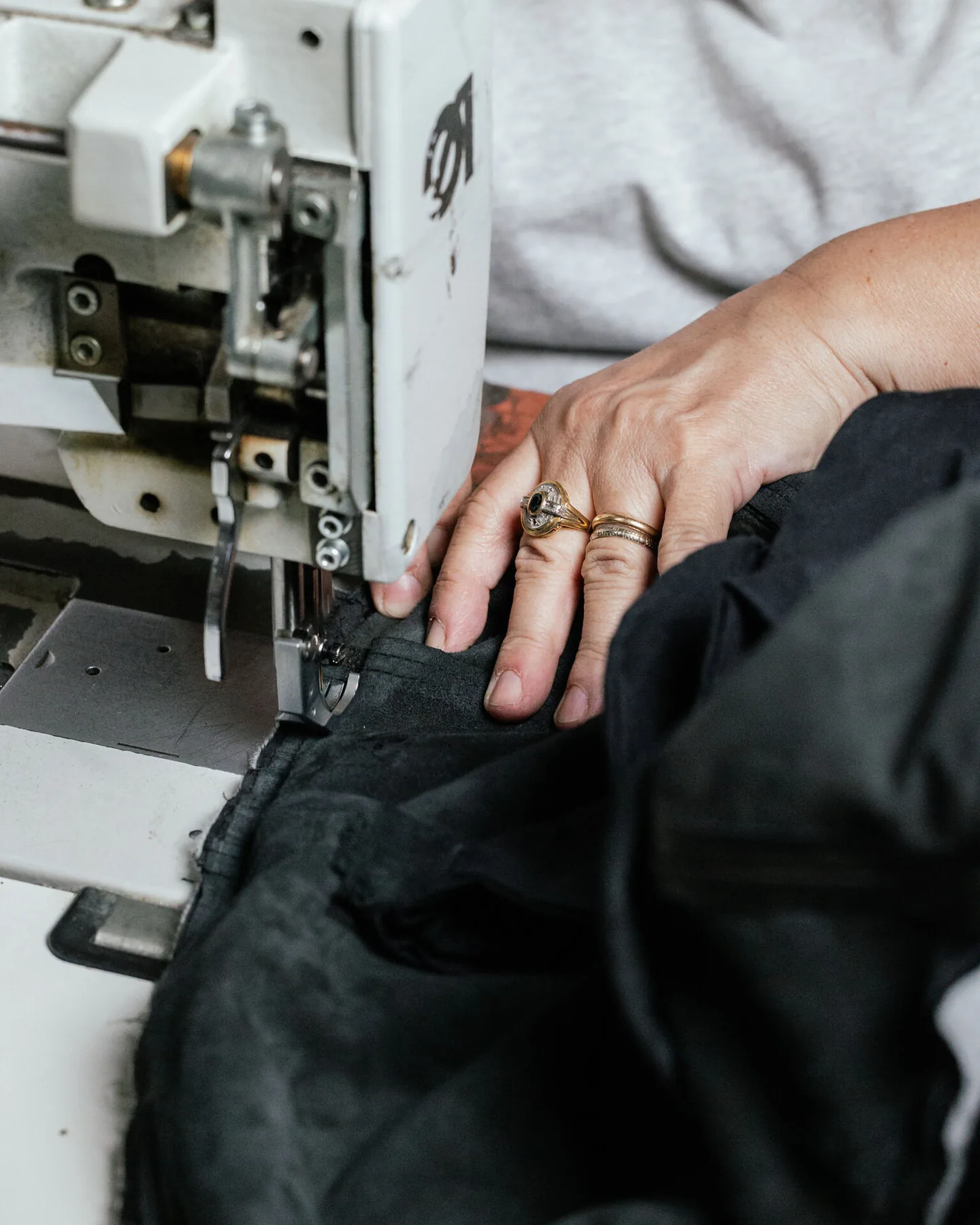
Everything to here happens before the leather reaches Via del Proconsolo. My work starts when the certified hide lands on the bench. But the method shapes the making. Because vacchetta is firm and full-grain, it has to be cut with respect for the grain direction and the natural marks of the animal. Because it patinas, I place the cleanest sections where they will be seen and let the character marks fall where wear will deepen them anyway.
Vegetable-tanned leather is also why hand finishing matters here in a way it would not on chrome. The edges are burnished, not painted; the fold lines are set by hand; the piece is built to be opened up and repaired in twenty years, because the leather will still be worth repairing. We offer lifetime repair on pieces made in the workshop for exactly this reason: the material earns it. A chrome bag is not worth re-stitching. A vacchetta jacket is, three times over.
It is also why I am comfortable telling people, plainly, what a real piece costs and why. The leather behind it carried six weeks of someone's labour before I ever touched it. If you want the long-view arithmetic on that (what you actually pay for over a decade of wear versus the cheaper alternative), we wrote it out in full in artisan leather versus synthetic. The short version is that the price is in the process you have just read, and the value shows up in year ten.
So when someone asks how Florentine leather is made, the honest answer runs from a salted hide in Santa Croce, through weeks in chestnut and quebracho and mimosa, through tallow grease worked in by hand, to a bench five doors from the Duomo where a third generation cuts it with the grain. That whole chain is what the word means. Anything shorter is a shop selling you the word without the leather behind it. If you want to see what comes out the other end, the Collection is the workshop's answer, the bespoke page is where we start one built around you, and the rest of the Journal covers everything else we make and mend.