Bespoke is a word used often. Often wrong. In this piece we try to explain what actually happens when a client walks into the workshop and orders a jacket, a bag or a pair of gloves built around them.
We have worked leather in Florence for three generations. My grandfather opened the workshop after the war. My father carried it on. I continue, with the same hands and the same tools.
What real bespoke means
Bespoke does not mean picking the colour of a ready-made jacket. It does not mean taking it in at the waist or shortening the sleeves. That is altered ready-to-wear. Many do it.
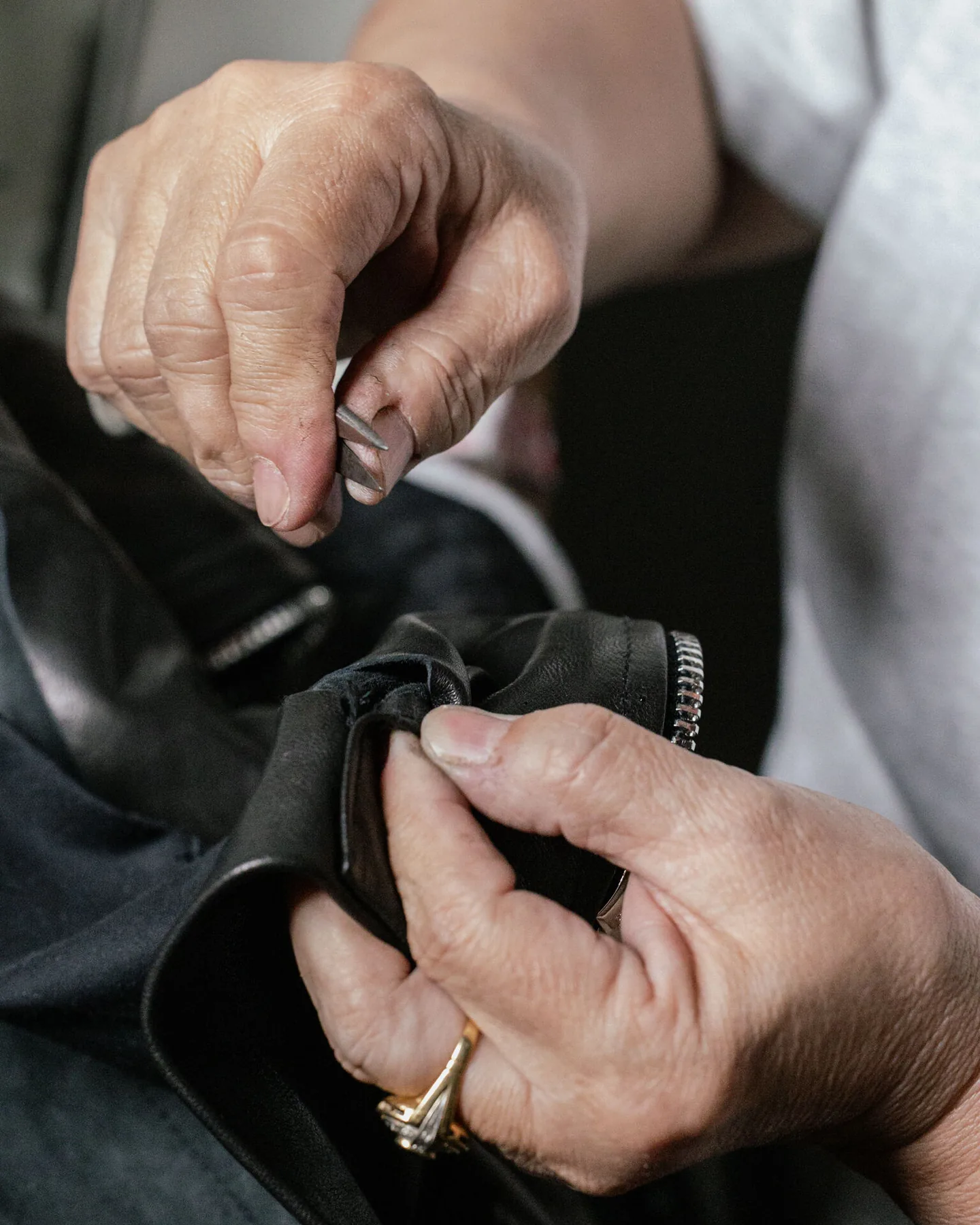
Bespoke, for us, means starting from zero. From the pattern, built on measurements taken in the workshop. From the hide, chosen with the client. From the stitching, done by hand where it matters. Each piece is born for one person. If that person never returns, the piece does not exist.
The difference shows on the first wear. Shoulders fall where they should. The sleeve turns on the arm without pulling. Leather follows the body, it does not fight it. A Modello Firenze jacket built this way lasts thirty years and ages well. A modified ready-made lasts five seasons.
The four steps: measurements, leather, fitting, delivery
The process never changes. The product changes, the method does not.
Step one: measurements
The client walks into the workshop at Via del Proconsolo 5r. We take 18 measurements for a jacket. 7 for a bag with custom handles. 12 for a pair of gloves. We take the measurements ourselves, never the client from home. The hand sees things the tape does not.
This is also when we discuss the project. What the piece is for. How the person who wears it dresses. Where it will be used. A travel jacket is not a city jacket. A document bag is not a weekend bag.
Step two: leather
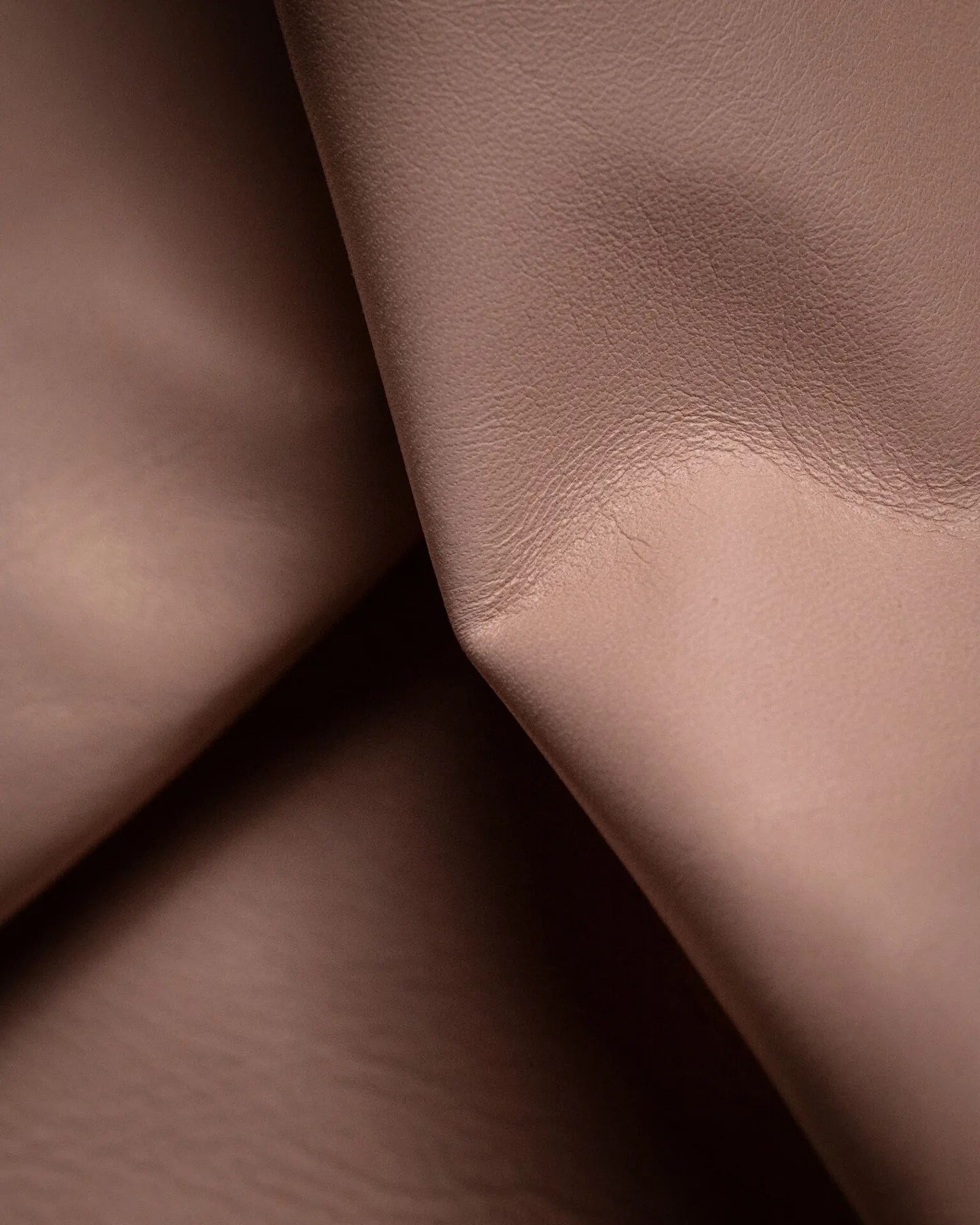
On the workshop bench we show the hides. Not a swatch book, the real hides, whole. The client touches them, folds them, smells them. Tuscan tanning, Italian tanning, French tanning. Each with its character.
We choose together. Smooth full-grain for a sober piece. Hammered leather for character. French calf for brighter colours. The choice of leather decides half the outcome.
Step three: fitting
Three to four weeks later we call the client for the fitting. The piece is stitched in toile, a fabric that simulates leather. They put it on, look in the mirror, we chalk-mark what is off. Shoulder a finger tighter. Sleeve a centimetre shorter. Pocket to be moved.
Bags have no toile fitting, but they have an intermediate check. The frame stitched without lining. We check load, weight, balance on the shoulder.
Step four: delivery
When the piece is finished, the client returns to the workshop. They put it on in front of us. We walk together, check the movements, listen to whether the leather speaks right. If something is off, back to the bench. We do not deliver pieces that do not convince us first.
How long it really takes
Ten weeks for a men's jacket. Eight for a women's jacket. Six for a hand-woven bag. Three for a full-grain belt. Two for a small leather good, a wallet or a card holder.
These are honest timelines. Anyone promising a bespoke leather jacket in three weeks is selling something else. Hand stitching takes hours. Leather needs to rest between stages. A first pattern has to be built from scratch and then corrected after the fitting.
From the second commission, timelines shorten. The pattern exists, the measurements are ours, the leather is chosen faster. A returning client can have a second jacket in seven weeks.
The leather: first-cut hides and why they matter
We use only first-cut hides. That means two things. First, the upper layer of the skin, the one that keeps the original grain. Second, hides without flaws, marks or weak spots.
Full-grain leather is not buffed on the surface to hide imperfections. What you see is the real skin. It ages, takes on the colour of the hand that uses it, tells the story of who wears it. Surface-corrected leather, after a year, has nothing left to tell.
We work with three tanneries. One in Tuscany, in Santa Croce sull'Arno, for vegetable tanning. One in Milan for soft drum-dyed hides. One in France, in Aquitaine, for coloured calf. All three have known us for decades. Hides arrive at the workshop pre-selected, never from stock.
Who it is for (and who it is not for)
The Florence leather atelier is not for everyone. We say so to first-time clients. It saves us and them time.
It works for those who want a piece that lasts twenty years. For those with a particular posture, a higher shoulder, a broad or narrow chest, where ready-made never sits well. For those who have a precise idea of colour or craft and cannot find it in shops. For those who buy less but buy better.
It does not work for those who want one season's fashion leather. For those who measure a piece by the price tag. For those in a hurry. For those who do not know what they want and need convincing. Bespoke starts from the client, not from us.
What changes between Modello Firenze and the women's jacket
The Modello Firenze is the house men's jacket. Clean shoulder, two back vents, three pockets, hip length. Built in lamb nappa or soft calf. It lives under a coat in winter and alone in mid-season. The most requested made-to-measure leather jacket in the workshop.
The women's jacket is its own chapter. Not a reduced version of the Modello Firenze. It is built on the figure, follows the waist, includes darts the men's jacket does not have. The leather is chosen thinner, often French calf, because it has to drape and not stiffen the line. The pattern changes, the number of measurements changes, the fitting changes.
This is why we never speak of unisex in leather. Leather forgives no shortcut. Building a women's jacket from a men's pattern means making a jacket that falls badly. We know because we tried in the Seventies and we stopped.
If this way of working matches what you are looking for, you will find us at Via del Proconsolo 5r, in Florence, seven days a week. We can start with a visit to the workshop, a conversation about the project, or a thirty-minute video call if you live far. From there we will see if it is worth beginning.