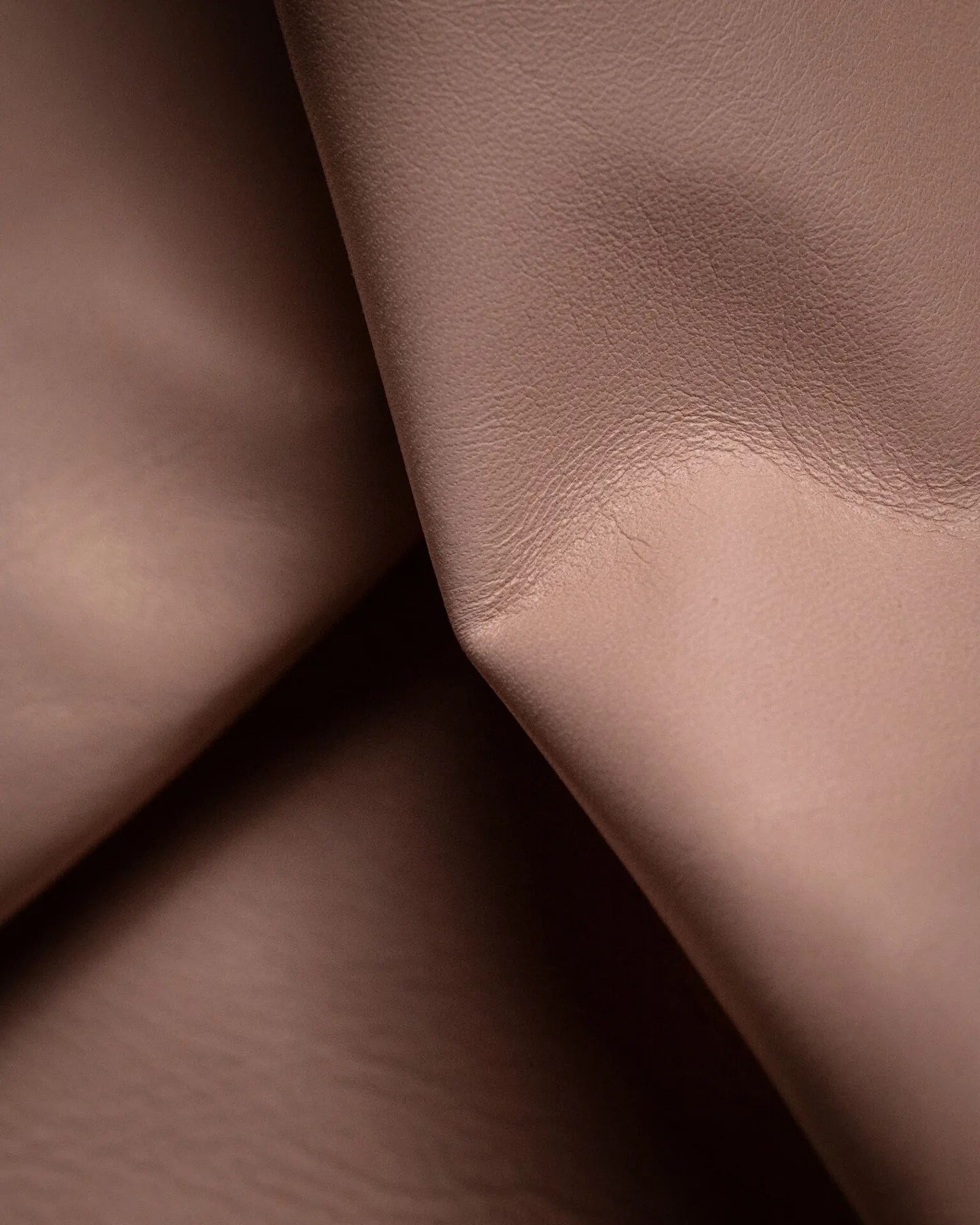
Buyers judge a tote by its front panel, which is the one part that almost never fails. The load goes somewhere else: down through the two handle roots, into the base, out to the lower corners. Read those three places and you can tell a bag built to be carried from a bag built to be sold.
- No closure, no frame. The load runs down into two handle roots and a base — that is where a tote fails, never on the front panel.
- The handle root decides the life of the bag: a rivet gathers the pull onto one hole, a stitched root over an internal reinforcement spreads it.
- Lined or unlined is structural, not a finish. Unlined means the hide is the structure and every seam end is on show.
- At ten years a good tote yields everywhere at once: it relaxes, bellies and darkens. A bad one fails at one point.
- Five checks settle it: lift by one handle, look inside the root, press the base, feel the cut edge, ask who cut it.
What a leather tote has to do that other bags do not
A tote is an open box. No flap, no zip, no frame: the shape holds because the leather was cut and joined to hold it, and the load runs vertically into two handles and a base. Everything else follows from that.
It is also among the easiest shapes to imitate: it looks like a rectangle with two straps. Around San Lorenzo or Mercato Nuovo it costs the price of lunch, and much of it arrived finished, in bulk, from abroad. Italy's tourism portal keeps a page on Tuscan leather goods as a regional craft. The stall version has no region behind it. The general signals are in our guide to Florence leather bags; this piece goes into the joints.
Where an Italian leather tote gives out first
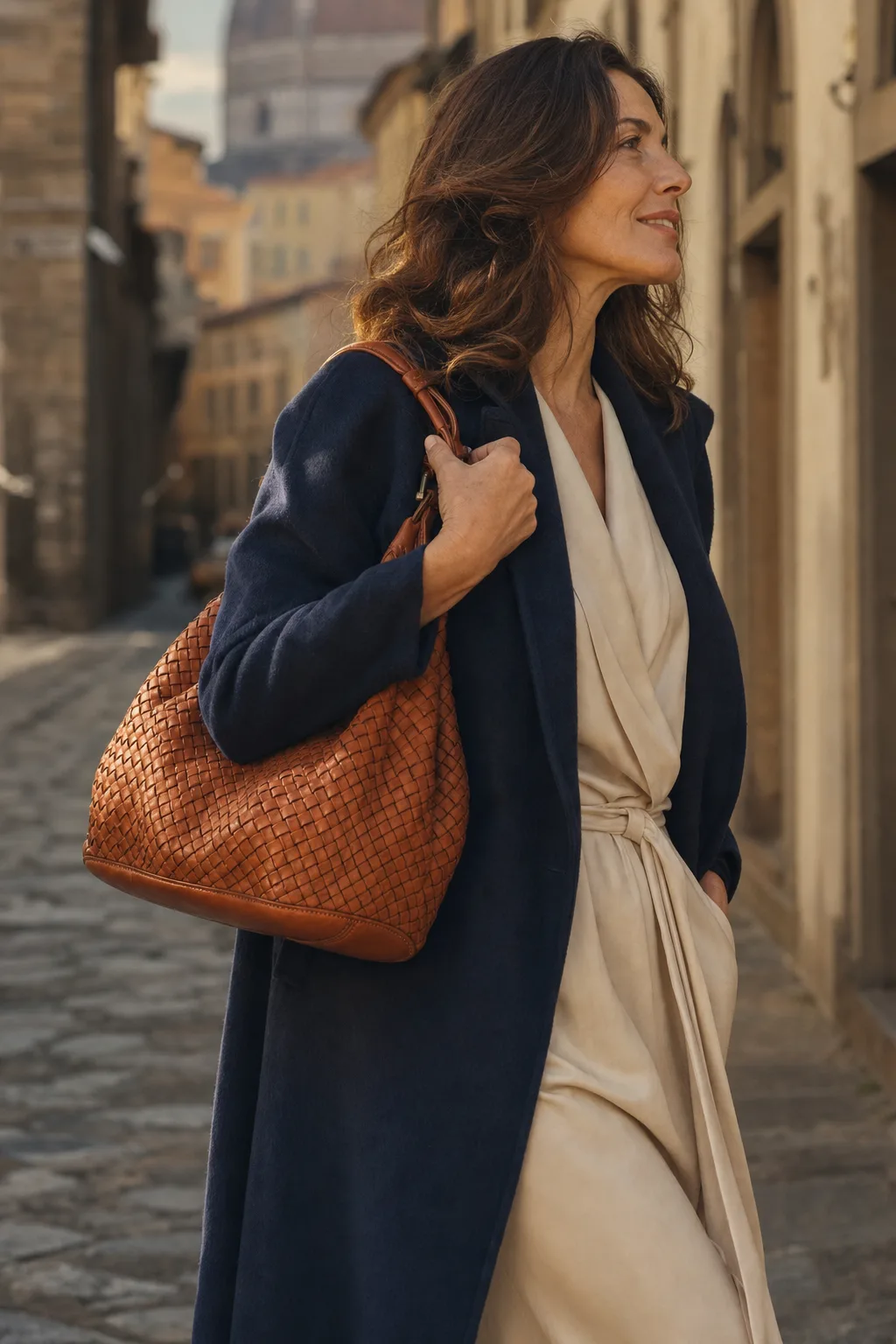
Three places, and none is the front panel: the handle roots, the base, the two lower corners. A tote almost never wears through in the middle of a panel. When a handle fails, it tears out at the root, from the leather it was set into.
Give a well-made tote ten years and it yields everywhere at once. The sides relax, the base bellies under what it has carried, the handles darken where your hand closes. That settling is the point of buying one. A badly made tote stays stiff, then goes at one point, usually with everything still inside. A crossbody fails on another logic, because it hangs rather than stands: we took that apart on the Italian leather crossbody bag.
The handle root: rivet, or stitched through a reinforcement
The root is the small patch where a handle meets the bag, and it carries the whole load through an area the size of a coin. There are two ways to build one. A rivet is quick and looks solid, and it gathers every kilo onto one hole. Hide tears in a crescent around a hole.
The other way takes longer. A second piece of hide goes behind the panel as a reinforcement, invisible once the bag is finished; the handle is stitched through both layers, then bar-tacked across the ends of the seam. The pull spreads along a line instead of gathering at a point. None of this shows from outside — which is the first reason to look in.
Lined or unlined: what the atelier is really choosing
A lining is not decoration. It is a structural decision taken before the first cut, and it settles which hides the bag can be made from.
The two pull in opposite directions. Both are legitimate; only one of them lets you check the work.
| Unlined | Lined | |
|---|---|---|
| Interior surface | Flesh side of the hide | Fabric or a second leather |
| Hide it demands | Thick, even in tone across a large panel | Thinner or less consistent hide works |
| Seam ends | On show | Tucked away |
| Inside pocket | Sewn onto the hide | Built into the lining wall |
| What you can inspect | Every seam in the bag | The lining |
The base, the gusset and the cut edge
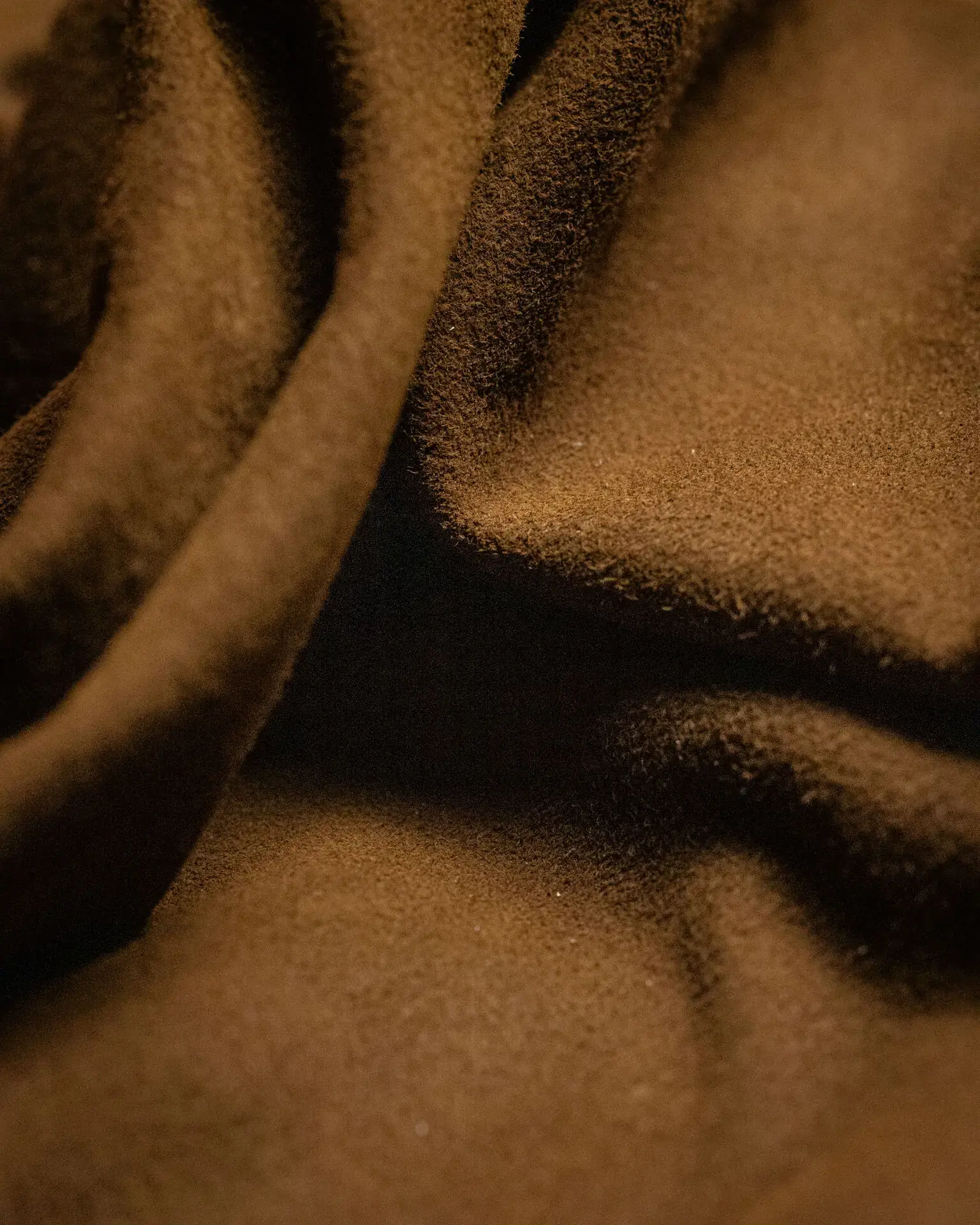
The base takes everything you drop in. Cut it as part of the body and there is no seam underneath, but no shape either. Cut it as a separate panel joined to a gusset — the side band that gives the bag depth — and it holds a rectangle, but a seam now runs around the load.
That seam is why the cut edge matters more on a tote than on any other bag. An edge is either burnished — rounded, sealed in layers, slicked hard with heat — or painted over raw, and paint cracks at the base first, where the flexing happens. Vegetable-tanned hide of this kind comes from the tanneries at Santa Croce sull'Arno, where chestnut, quebracho and mimosa tannins replace chrome salts. The tanneries that belong to the Consorzio Vera Pelle Italiana Conciata al Vegetale in Toscana work to its production rules, and it is their trademark, not a workshop's. The long version is in how Florentine leather is made.
Five checks before you buy a leather tote in Florence
Two minutes in the shop, before you look at the price.
- Lift it by one handle. The bag should hang without the leather puckering around the root.
- Look inside the root. Stitches through the hide, and a second layer behind them, not a rivet head.
- Press the base with your fist. It should push back. A base that folds has nothing in it.
- Run a thumb along the cut edge at a bottom corner. Rounded and hard means burnished; sharp or flaking means painted.
- Ask who cut it. A workshop answers with a name and a street; a reseller changes the subject.
A visitor's guide like Tuscany Now & More's guide to buying leather in Florence tells you which streets to walk; these five tell you what to do with the bag in your hands. The ten-year comparison is in artisan leather versus synthetic.
Come and load one on your arm
You cannot judge a tote empty on a hook. You judge it with your things in it, on your own arm, walking.
I am the third generation of the family. Our store is on Via del Proconsolo, at number 5r, a few minutes from the Duomo, open seven days a week — the atelier where we build is in Pontassieve. Walk in, fill a bag with whatever you are carrying, lift it by one handle, put your head inside and look at the roots. If you live abroad, we do the same over a thirty-minute video call, and we talk through the hide, the size, the handle length and the lining. Some people order from the collection, some start a bespoke project, and some leave able to read every other window in Florence. All three are fine with us. The rest of the atelier's notes are in the journal.