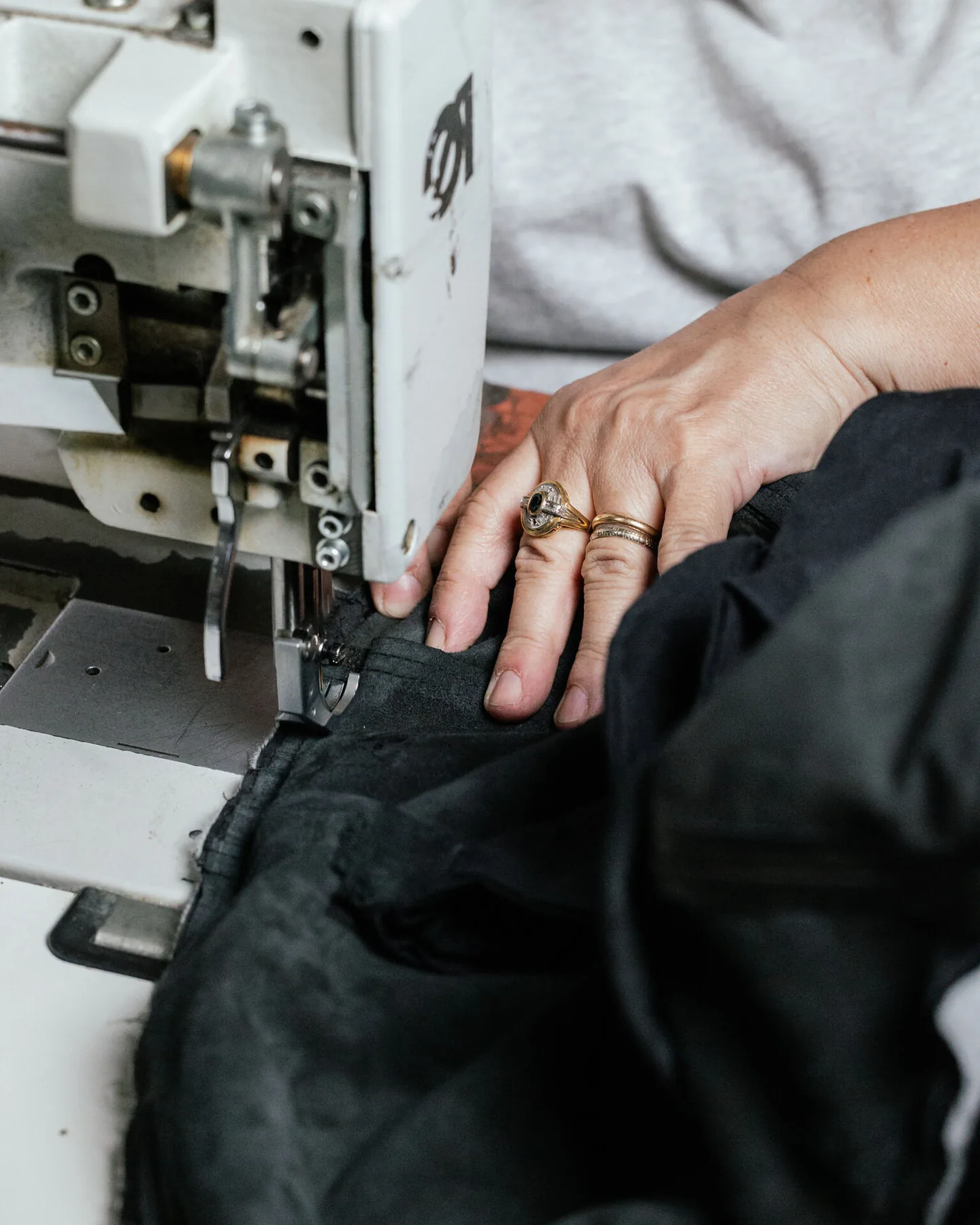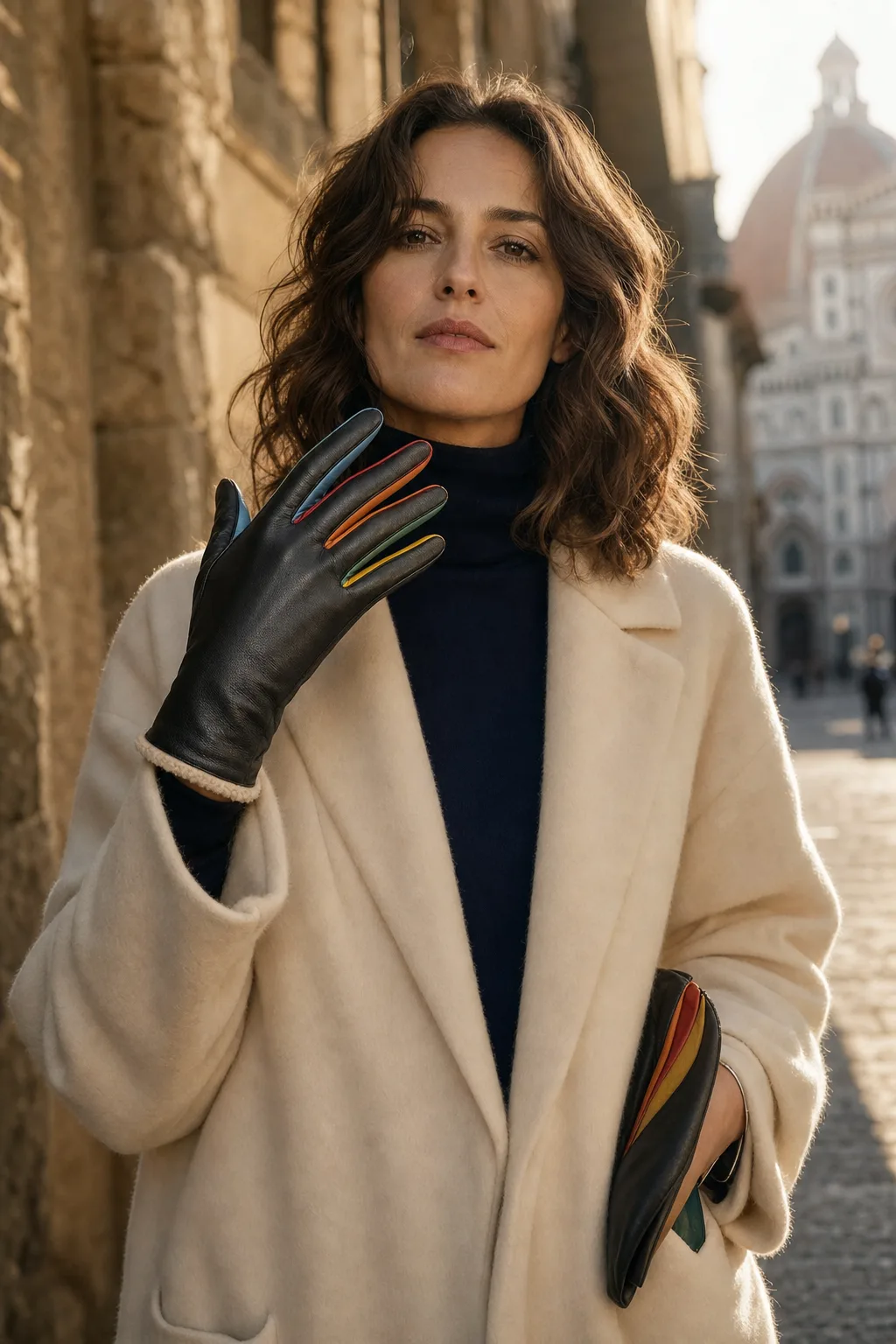
A glove is the leather piece visitors judge fastest: a squeeze, a look at the colour, done. The checks that matter sit in the leather, the seams, the lining and the fit, and they work in any shop in Florence.
- Madova, run by the Donnini family, has made leather gloves since 1919 and has sold them from its shop at Via Guicciardini 1r since 1954. Madova says it sells leather gloves only.
- Riva Firenze, at Via del Proconsolo 5r near the Duomo, sells gloves next to jackets, hand-woven bags, belts and small leather goods.
- Judge any pair on four points: the leather, the seams, the lining and the fit.
- Inseam hides the stitching, piqué laps one edge over the other, outseam shows thread and edges.
- A glove that fits is close across the knuckles when you make a fist, with no empty space at the fingertips.
What makes Madova the reference for gloves in Florence?
A century spent on one product. Madova's own history says the Donnini family has made leather gloves since 1919, that production stopped from the crisis years until 1945, and that the family opened its shop at Via Guicciardini 1r in 1954, under the Madova name.
The Condé Nast Traveler review describes what a visitor meets inside. An assistant measures your hand and searches the stock for the right pair. The gloves, for men and women, are designed and made in-house, in deerskin, lamb or nappa, and lined with silk, wool or cashmere. Madova describes itself as the only shop in Europe, perhaps in the world, that makes and sells nothing but leather gloves. If gloves are all you came for, start there.
Where else can you buy leather gloves in Florence?
In the workshops that make more than gloves. A glove specialist puts every style in one room; a leather workshop hangs its gloves beside the jackets, bags and belts cut from its hides.
Riva Firenze is one of these: a family business, now in its third generation, at Via del Proconsolo 5r. Our collection names gloves as one of five families of leather goods, and describes them as cut to the hand.
| Madova | Riva Firenze | |
|---|---|---|
| What it sells | Leather gloves only, by its own description, for men and women | Gloves, leather jackets, hand-woven bags, belts and small leather goods |
| Where | Via Guicciardini 1r, just off the Ponte Vecchio | Via del Proconsolo 5r, near the Duomo |
| In the shop | An assistant measures your hand and brings pairs from the drawers | You try gloves on beside jackets, bags and belts |
| From abroad | Online orders and a free catalogue | A WhatsApp video call to see the collection, shipping worldwide |
The wider map of the city, from market stalls to workshops, is in our Florence leather atelier guide.
What should you look for in the leather of a glove?
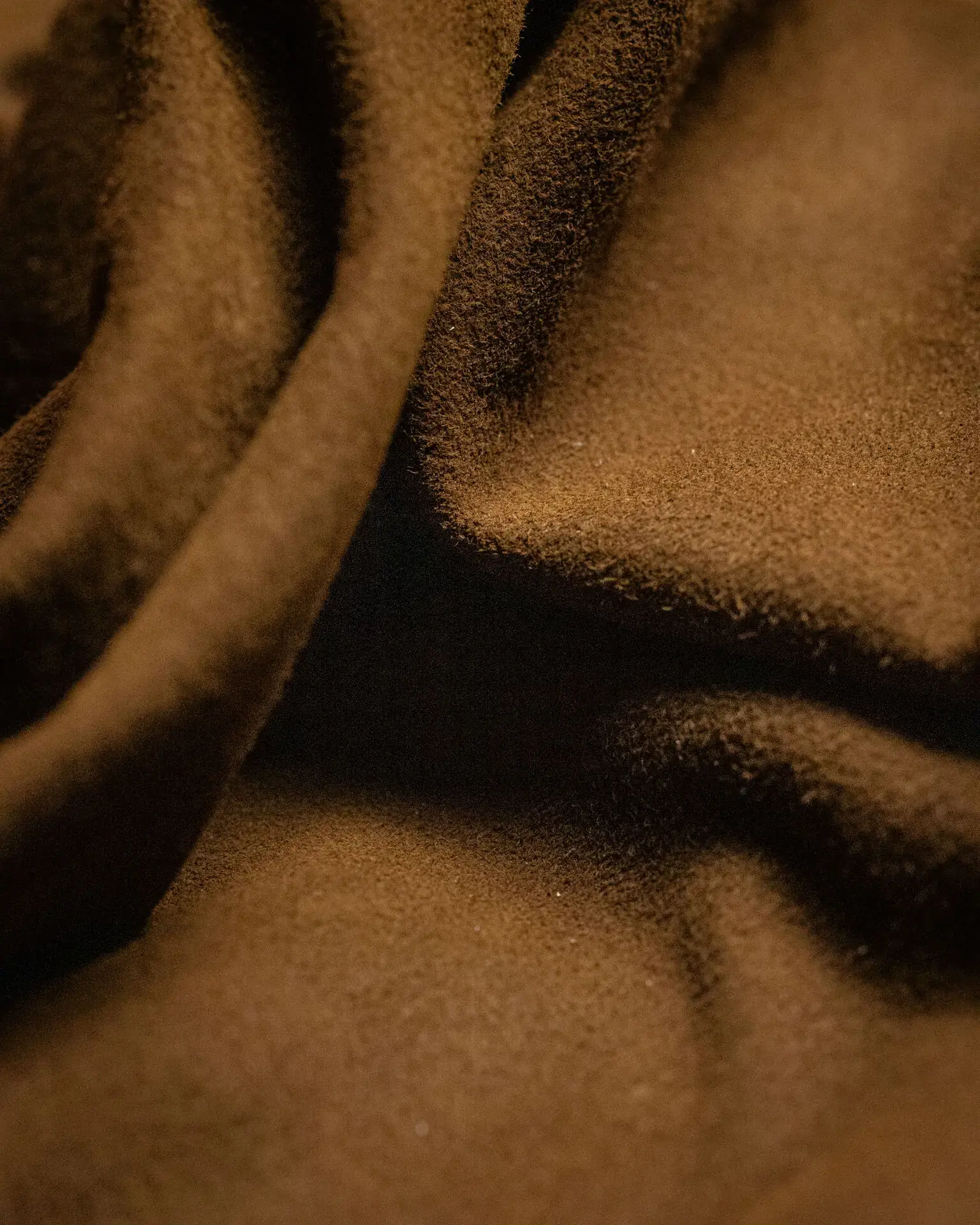
Softness that comes back. Glove leather has to be thin enough to fold at every knuckle and firm enough to keep the shape of a finger. Lamb and nappa give a smooth, close surface that suits dress gloves. Deerskin carries a heavier grain and a more casual look.
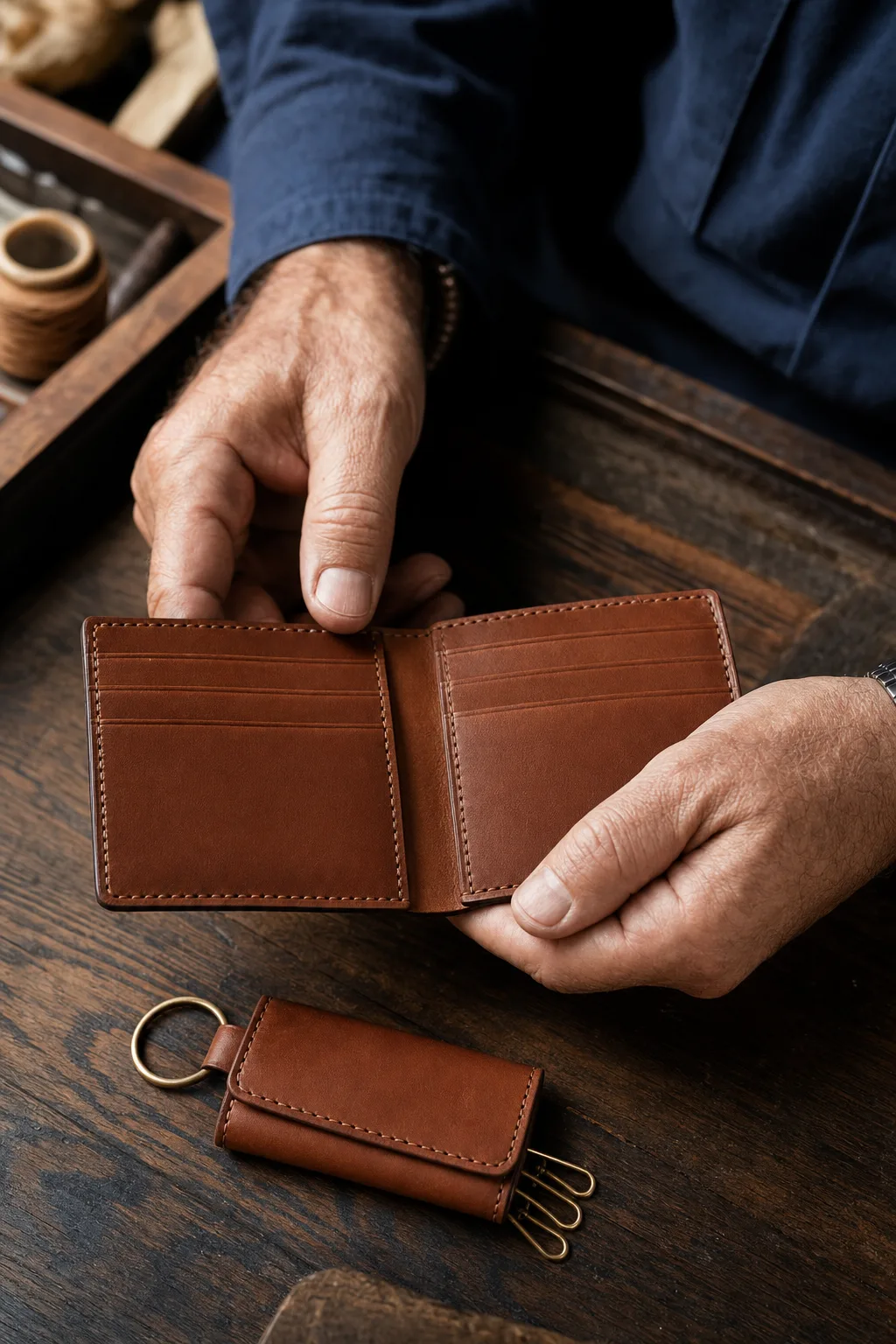
Pinch the back of the glove and pull gently across the hand. Good glove leather gives a little, then settles. At the knuckles, a painted or coated surface cracks first, while open grain only creases. Our jacket guide explains full-grain, corrected grain and split leather, and how Florentine leather is made covers the tanning.
How are the seams of a leather glove sewn?
You can tell the common seams apart at the edge of a finger. The terms below follow the gloving glossary kept by Yeovil's Virtual Museum.
| Seam | How it is sewn | What you see |
|---|---|---|
| Inseam | Sewn inside out, then turned | A clean edge with no thread showing |
| Piqué | One edge lapped over the other and sewn | A fine line of stitching, one edge on top |
| Outseam | Sewn on the outside, as in prixseam or whipstitch | Both edges and the thread on show |
Look also for fourchettes, the side panels between the fingers, and quirks, small triangular inserts at the base of the fingers and the thumb that improve the fit. Turn one finger back if the seller allows it. The thread should run evenly to the tip, with no loose ends where seams meet. Thread does the same job on an Italian leather belt.
Lined or unlined: which leather gloves should you choose?
Choose by the cold you expect. Unlined gloves sit closest to the hand and show its shape. Lined gloves give up some of that closeness for warmth. Silk adds the least bulk, while wool and cashmere add the most warmth.
Our collection describes its gloves as soft leather outside, warmth within. Whichever you choose, try on the lined pair you mean to buy, because the lining takes up room inside. Turn back the cuff to see how the lining is finished. Then slide the glove off: a lining that comes out with your fingers is not held at the tips.
How should a leather glove fit?
Close, with no room for the fingers to swim. Glove sizes are usually worked out from the circumference of the hand at its widest point, around the knuckles, without the thumb. Measure your dominant hand and keep the number.
In the shop, make a fist. The leather should pull close across the knuckles without straining the seams. Open your hand: each fingertip should reach the end of its finger, and the thumb should move without dragging the palm. Leather gives a little with wear, so a pair that feels close on the first day usually settles. A pair that feels loose stays loose.
Where can you try leather gloves in Italy near the Duomo?
At Via del Proconsolo 5r, a few steps from the cathedral. Riva Firenze opens every day: Monday from 9:00 to 21:30, Tuesday to Saturday from 9:30 to 21:30, Sunday from 9:30 to 20:00. Bring the four checks. Ask to see a glove turned inside out, make a fist, and try the lined pair.
From abroad, we walk you through the collection on a WhatsApp video call and ship worldwide. If the gloves lead you to a jacket or a bag cut to your measurements, the bespoke service starts with one visit to the store or a thirty-minute video call. Prices change with the leather and the work. Come to the atelier or write to us: we'll tell you everything, with no obligation. You can look through the collection before you come, and our other notes on Florentine leather are in the journal.