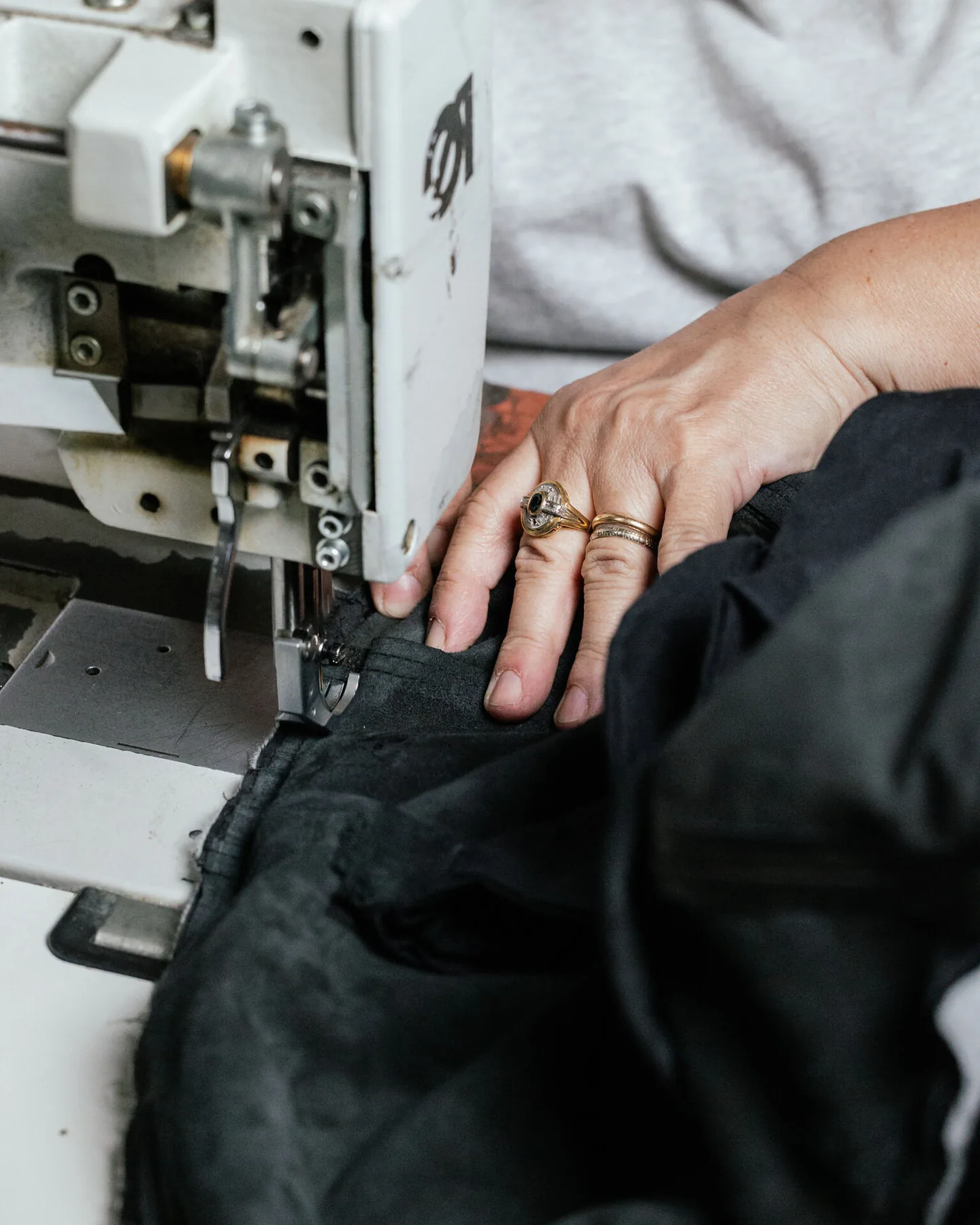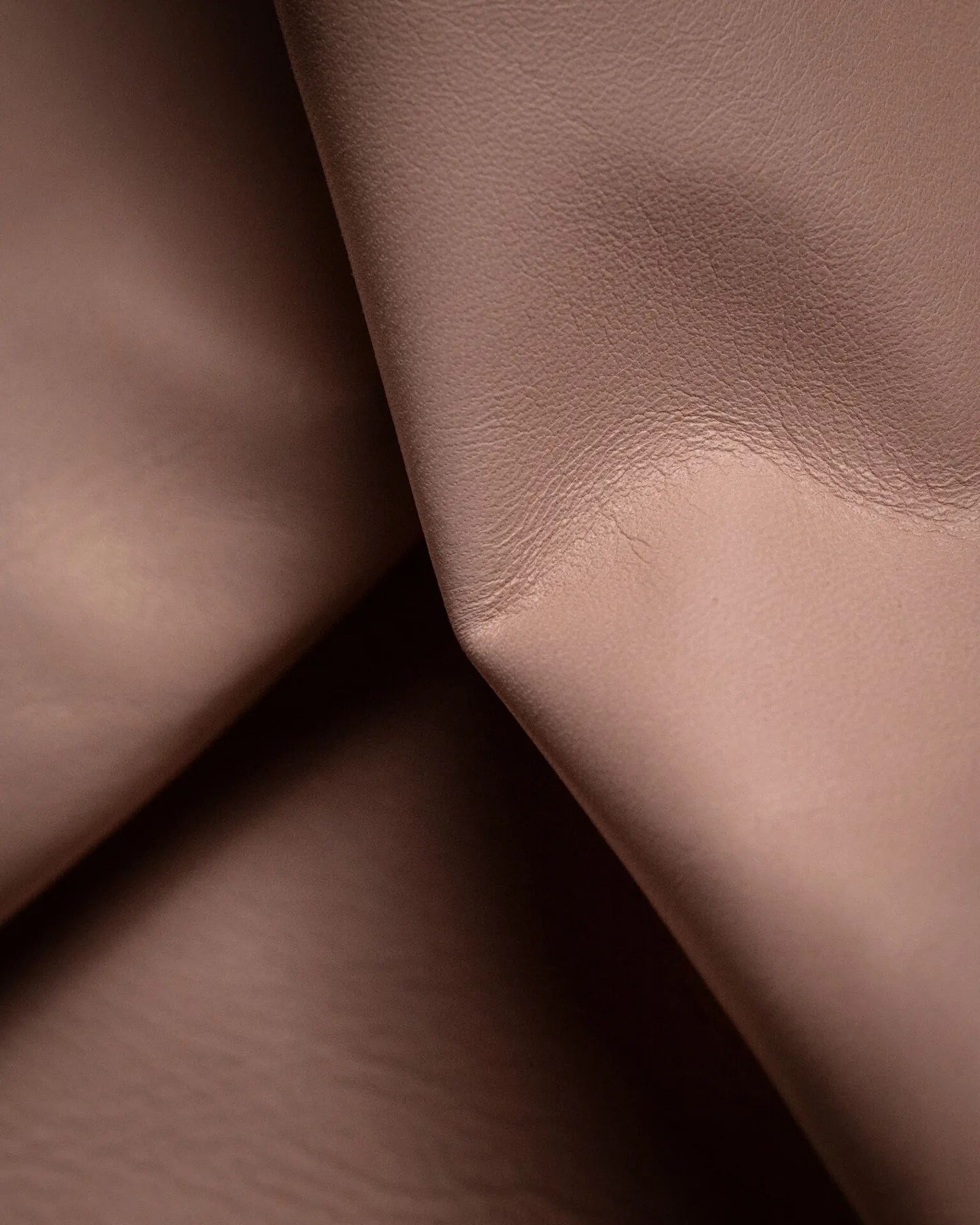
Shops sell a belt by its strap: the color, the grain, the stitching along the edge. The wear shows up somewhere else. Take off a belt you wear every day and look at the hole you use. It has probably stretched into an oval, and the leather just past it carries a deep crease. Everything below starts from those two marks.
- A belt wears at the hole you use and the fold at the buckle. Those two points carry the pull, and the strap between them rarely wears through.
- Construction decides how it fails. A single layer of full-grain leather stretches and creases. Layers held only by glue can split open at the edge.
- Stitching keeps a two-layer belt together after the glue has aged, and it is the part a bench can unpick and sew again.
- A buckle on screws comes off with a screwdriver. A buckle stitched into the fold needs the fold opened. Both can be restored.
- A dress belt is narrower and thinner than a casual belt, and the hole and the fold still do all the work.
- Asked how long a full-grain belt lasts, the Riva Firenze atelier answers twenty years with regular use, often more.
Why does an Italian leather belt wear out at the hole and the buckle?
Because a belt is a strap under tension, and tension gathers where the strap is held. When you close it, the prong holds one hole and the buckle holds one fold. Sit down and the pull on both rises. The strap in between carries the same pull across its full width, which is why it almost never tears.
Leather answers a steady pull by giving way slowly, in the direction it is pulled. The hole you use grows into an oval over the years. The strap folds into the buckle along the same line every day, and a crease sets in there first. On a full-grain leather belt that crease darkens and softens; on a coated, corrected surface the finish cracks along it. If those terms are new, we explain full-grain, corrected grain and split leather in our jacket guide. The edges wear too, against the belt loops, each time you move.
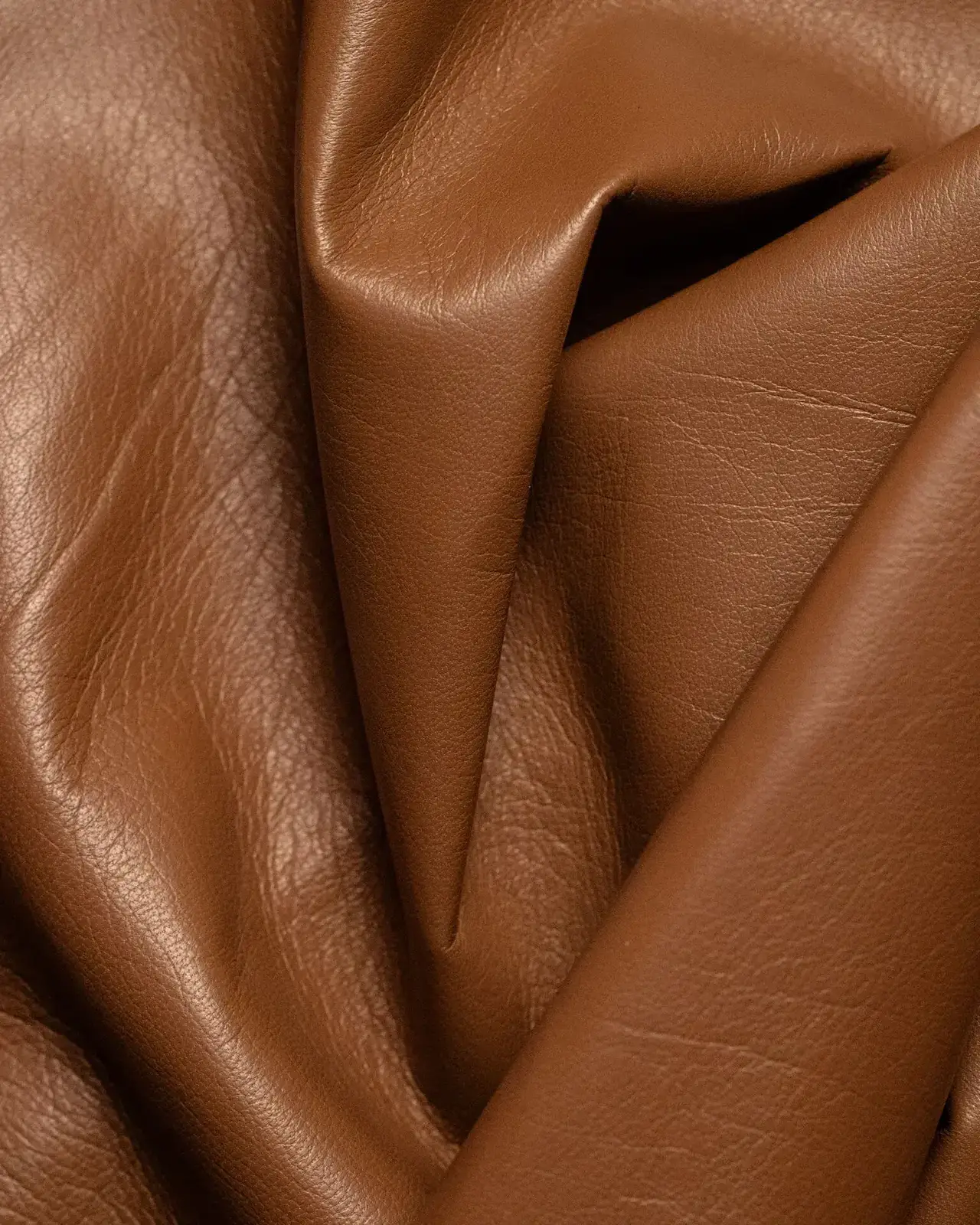
Single layer, two layers or glue: how is a leather belt built?
In one of three ways. It is cut as a single strip of full-grain hide, or made from two layers glued and then stitched, or made from layers held by glue alone. The first two can go back to a bench. The third rarely comes back once its layers start to separate.
| Single layer | Two layers, stitched | Layers glued only | |
|---|---|---|---|
| How it is made | One strip of full-grain hide, holes punched through its whole thickness | A full-grain face glued to a leather lining, then sewn along both edges | A face glued to a lining or filler, edges sealed, no stitching |
| Where it wears | The hole stretches, the fold creases, the edge rubs | The glue line ages first; the thread holds the layers | The edge opens at the fold and the holes, then the layers peel |
| What a bench can do | Refinish the edge, sew a new fold, shorten the strap | Replace the stitching and the lining | Very little, once the layers have parted |
A single layer asks more of the hide: it has to be thick and firm enough to hold its shape alone, which is where vegetable-tanned full-grain leather earns its place. In Tuscany, the Consorzio Vera Pelle Italiana Conciata al Vegetale regulates vegetable-tanned leather made in the region through a registered trademark, and its member tanneries work to the consortium's production rules.
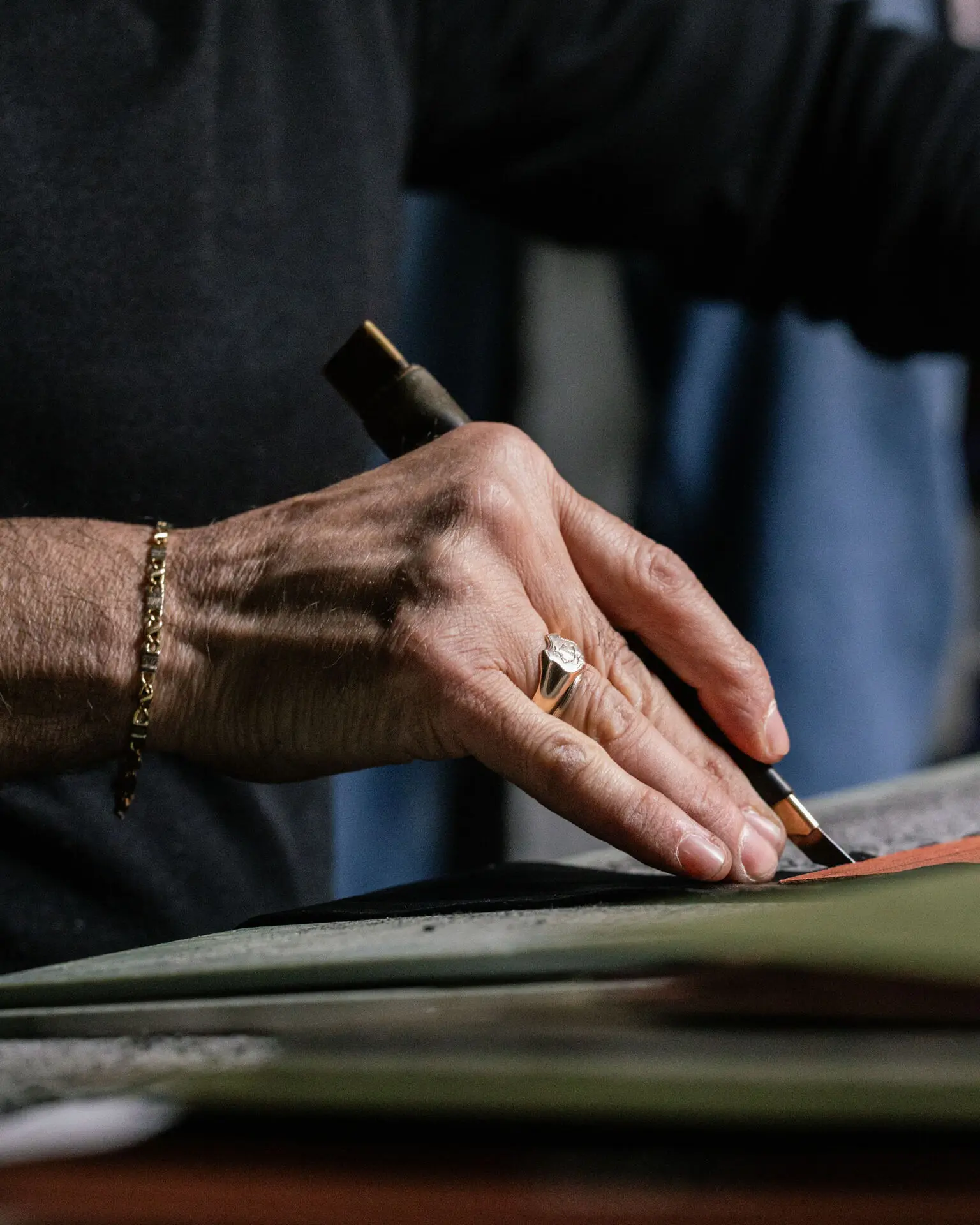
Belts are a market-stall staple in Florence. The leather-buying guide published by Tuscany Now & More describes the stock at San Lorenzo and the Mercato Nuovo as mostly touristy: belts, wallets, bags and key fobs. Ana's Secret Guide warns that goods around those markets are often made from pelle soffiata, a processed, expanded leather that never develops a patina. If you are still choosing where to buy, our guide to the best leather shop in Florence, Italy sets out five signs of a real workshop.
Stitched fold or screws: how is the buckle attached?
At the buckle end, the strap folds back around the buckle bar, with a slot cut for the prong. The fold is then closed in one of three ways: stitched, riveted or screwed. That choice decides what happens on the day the buckle or the fold needs work.
A stitched fold is the quietest and the slowest to change. To replace the buckle, someone unpicks the thread and sews the fold again. Screws, often called Chicago screws, let you swap a buckle, or move it to a new strap, with a screwdriver. A rivet is quick to set and permanent; changing the buckle means drilling it out.
Turn the buckle end over before you buy. A line of thread across the fold, or the heads of screws, shows the belt can be opened again. A fold with no visible stitch, rivet or screw is worth a question, because something you cannot see is holding it shut.
Dress belt or casual belt: what actually changes?
Width, thickness and the edge. An Italian leather dress belt is narrower and thinner, so it passes through trouser loops and lies flat under a jacket. A casual belt is wider and heavier, cut for jeans and chinos. The hole and the fold do the same work on both.
The hide follows the job. Dress belts are usually smooth calf with a fine polished edge and a small plain buckle. Casual belts take a thicker, firmer hide, often vegetable-tanned, with a larger buckle. Handmade leather belts for men sit on both sides of that line, so tell the maker how you will wear yours before anything is cut. You can handle the full-grain belts in our collection at the store.
What can an atelier restore on a leather belt?
Almost everything on an Italian leather belt except the grain. Stitching, lining, edge, buckle and fold are all bench work, and a stretched hole can be left behind. The surface of the hide is the one part nobody replaces, so the leather you start with decides how far a belt goes.
- The hole you use. Shorten the strap from the buckle end and you move to a fresh hole nearer the tip.
- The fold. Unpick it, cut away the stretched end and sew a new fold.
- The buckle. Swap it on its screws, or open the fold and sew a new one in.
- The lining and the stitching. On a two-layer belt both can be replaced while the face stays.
- The edge. Sand it back, then burnish or paint it again, so the belt loops meet a sealed edge.
This is what sits behind the atelier's answer on durability: twenty years with regular use, often more, restored in the atelier when needed, lining and stitching included. Every Riva piece comes with repairs for life. Our repair answer also names the exception: industrial pieces, glued and heat-sealed, cannot be recovered after five years.
Try one on at Via del Proconsolo
An Italian leather belt is easier to judge on you than on a shelf. Close it, sit down, stand up, and watch where it bends.
I belong to the third generation of the family. The store is at Via del Proconsolo 5r, Firenze, a short walk from the Duomo, and it opens seven days a week. Come in, handle the hides, try a belt on and ask to see how its buckle end is closed. If you want one cut to your measurements, a bespoke belt takes three weeks. If you live abroad, a WhatsApp video call shows you the collection, and we ship wherever you are. Prices change with the leather and the work. Come to the atelier or write to us: we'll tell you everything, with no obligation. The rest of our notes on Florentine leather craft are in the journal.